Padel and pickleball can look similar from a distance: small courts, short rackets or paddles, quick rallies and a strong social scene. The padel vs pickleball difference becomes obvious once you play. Padel is a four-player, glass-walled game built around rebounds and teamwork; pickleball is lighter, cheaper to start, easier to organise, and usually kinder on the legs. If you are choosing where to spend your first £5-£50, the right answer depends on court access, fitness, budget and your appetite for either a tactical doubles challenge or a low-friction social hit.
In This Article
- Padel vs Pickleball: Key Differences Summarised
- Rules and Scoring: How Each Game is Played
- Courts and Equipment Compared
- Which Is Easier to Learn? The Learning Curve
- Costs and Availability in the UK
- Who Should Play Which? Matching Player Profiles
- Switching Sports: Common Mistakes to Avoid
- Frequently Asked Questions
Padel vs Pickleball: Key Differences Summarised
It is easy to lump these two sports together, but they feel different before the first rally is over:
- Padel evolved in Mexico, tailored for doubles on an enclosed, glass-walled court. It’s a blend of tennis and squash, with rebounds an essential part of every rally. The bat (racket) has no strings and is made from foam/carbon with holes for control. The sport features longer rallies, more tactical defence, and frequent use of the walls. UK clubs are expanding, and court availability is now a real factor in the decision.
- Pickleball was created in the US, blending elements of tennis, ping-pong and badminton. It is played on smaller, open courts with plastic paddles and a perforated ball. The gameplay rewards quick reactions, effective shot placement, and has a flatter, “ping pong” energy. There are no walls in standard pickleball. It is easy to try at UK leisure centres, community halls and mixed-ability club sessions.
In everyday play: Padel is about longer rallies using rebounds, favouring teamwork and spatial skills. Pickleball has briefer but more frequent points, is mostly open-court, and better suited for mixed-ability or single-player games. The true deal-breaker is the walls: without them, pickleball delivers a lighter, more agile rhythm.
Rules and Scoring: How Each Game is Played
Padel Rules: The Fundamentals
- Nearly always played in doubles (2 v 2), even recreationally
- Serve must be underhand from waist level, bouncing in the diagonally opposite service box
- Ball may bounce once, then can rebound off side or back glass/metal mesh walls and stay in play—but not off the ground fencing or ceiling
- Tennis-style scoring: points go 15, 30, 40, Deuce, Advantage, Game. Sets go to six games (a tiebreak at 6-6)
- Play resumes after every point with teams alternating sides
For the formal wording, compare our padel scoring and rules guide with the official LTA padel rules.
#### Serving in Padel
- You stand behind the service line, bounce ball behind line and hit underarm below waist
- The serve must bounce in the correct box and isn’t allowed to hit glass first (but can after bouncing in)
- Only one fault allowed (not two, as in tennis)
#### Wall Rebounds and Special Shots
- All glass/mesh walls (side and back) are live—rallies can feel unpredictable for beginners
- Use the back wall for defensive lobs and resets (unique to padel)
- ‘Smash’ shots can bounce on opponents’ side and then exit via the doors—high-level pros do this for ‘winning’ shots
Pickleball Rules: At a Glance
- Played as singles or doubles; both formats popular in UK
- Serves must be made underhand, with the paddle below the wrist, and land diagonally. One chance per serve
- ‘Kitchen’/No-volley zone (within 7 feet of the net) prohibits smashes from close range, ensuring rallies last
- Only the serving team can win points
- Games to 11 points (win by two)
- Serve alternates sides on every point in doubles, or every two points in singles
The official Pickleball England rules are worth reading before your first club night because serving and kitchen faults catch people out.
#### The Kitchen Explained
- Players cannot volley (hit ball in the air) while standing in the non-volley zone
- This stops serve-and-volley dominance and encourages rallies and net-dinking tactics
#### Faults and Points in Pickleball
- Hitting ball out, into the net, or volleying from the kitchen is a fault
- If serving, your team can win the point—if not, only the serve passes
Scoring Systems: How They Feel
- Padel scoring feels familiar to tennis/squash converts—games and sets develop rhythm and comebacks
- Pickleball’s race to 11 (by two) keeps matches snappy—perfect for club rotations or group sessions
Formats: Doubles vs Singles
- Padel: True doubles sport—singles padel courts exist, but are rare in the UK
- Pickleball: Easy to play both singly and as doubles; singles requires more movement but is feasible anywhere
Courts and Equipment Compared
Padel Court: Dimensions & Environment
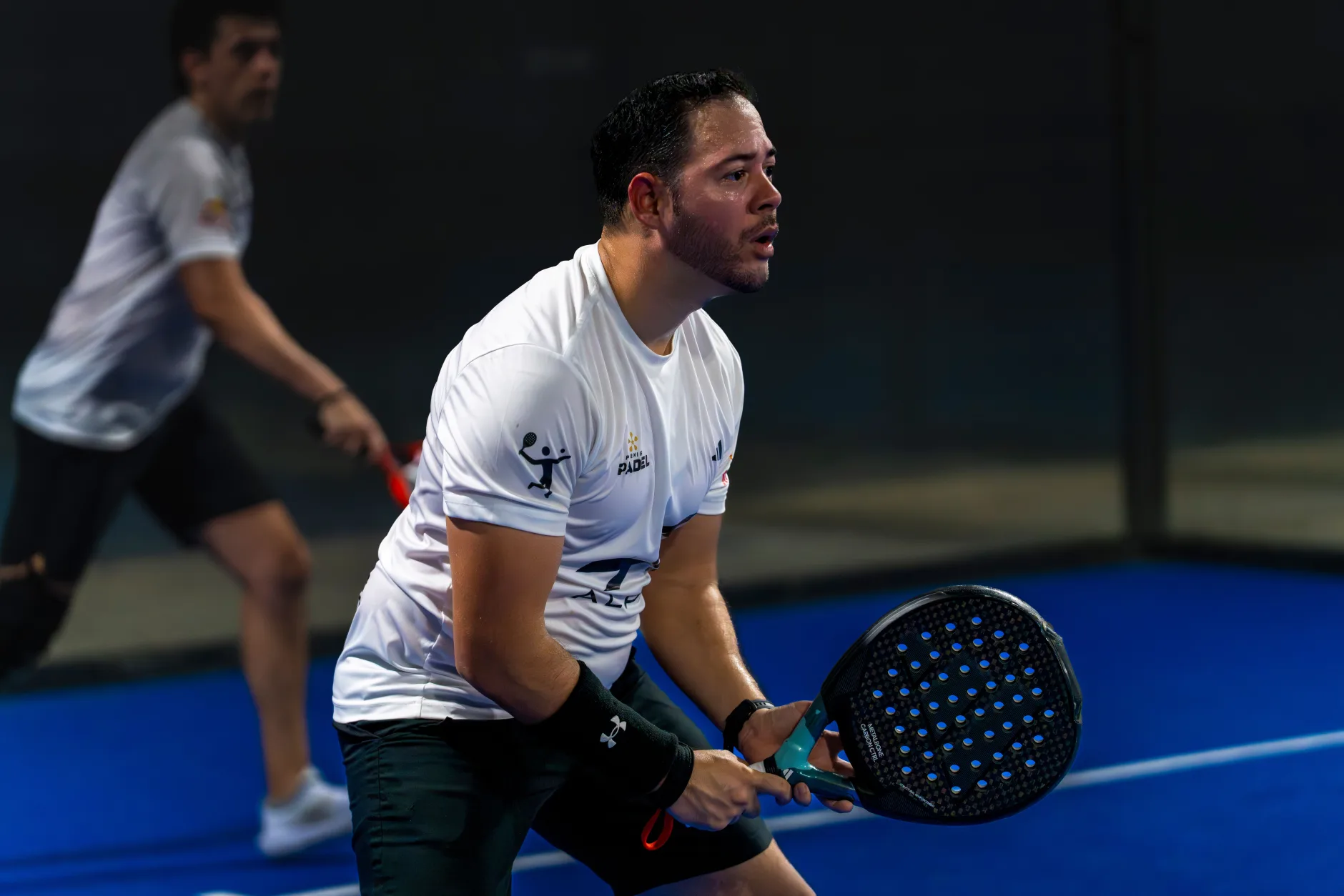
- Full court: 20m x 10m. Fully enclosed by glass (back and lower sides) and metal grid (upper/sides)
- Net: 92cm at sides, 88cm in centre
- Doors for ball retrieval (as some shots are played ‘out the door’ at advanced level)
- Floor usually blue synthetic ‘turf’ with sand infill (see Padel Court Surfaces Explained)
#### The Atmosphere Inside a Padel Court
- Playing inside glass/mesh makes rallies feel intimate and fast-paced
- Walls keep the ball in play longer than most beginners expect
- Acoustics: Padel balls make a softer, “thuddy” sound off glass; visually striking
Pickleball Court: Size & Openness
- Standard size: 13.4m x 6.1m. Marked with paint/tape, no walls
- Net: 91.4cm at posts, 86cm at centre—flatter than a padel net
- Often played in halls, gyms, painted on tennis courts, or pop-up sports venues
- No ball rebounds—shots only in play off first bounce or before boundary lines
#### Playing Environment in Pickleball
- Open, bright spaces: easier for large social groups and community events
- Less intimidating for total beginners—no “wall gets in the way” feeling
- Surface is most often wooden sports flooring or tarmac
Comparing Equipment: Feel and Build
#### Padel Racket
- Solid, round or teardrop shape, with drilled holes
- EVA foam core for power absorption and control
- No strings (less vibration than tennis)
- Entry rackets £45 (Decathlon UK), advanced carbon £120–£220 via Padel Shack/Padel Nuestro
#### Pickleball Paddle
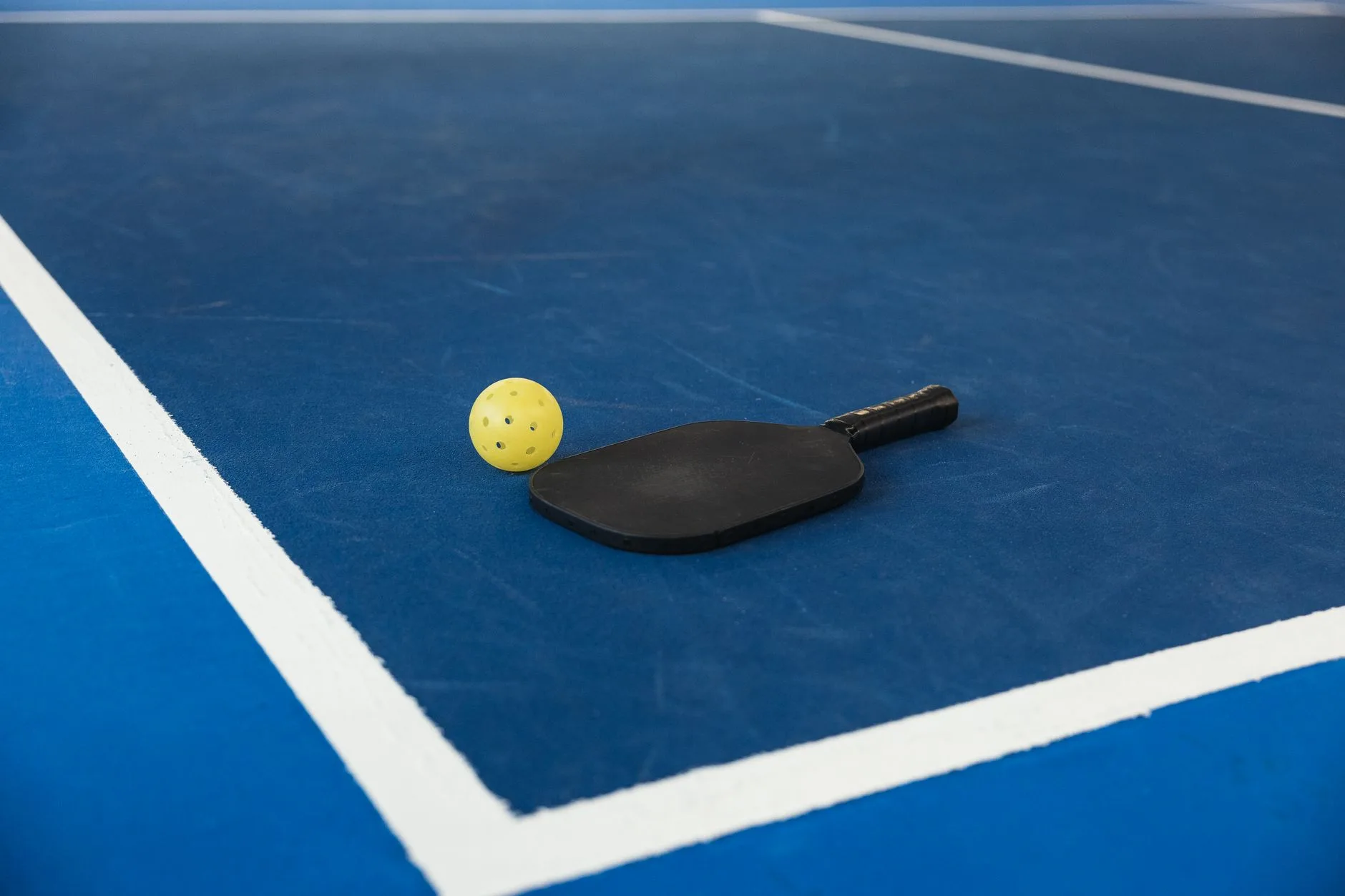
- Flat, solid, usually rectangular or oval; no holes
- Composite (polymer, graphite, fibreglass) construction—harder “ping” feel
- Lighter and stiffer than padel rackets
- Starter sets £20–£30 (Amazon UK), performance carbon/fibreglass up to £120
#### Ball Comparison
- Padel ball: Reduced-pressure felt tennis ball; softer, moderate bounce—pack of three £5–£8
- Pickleball ball: Hard, hollow plastic with holes (like a whiffle ball); less bounce—set of six £5–£8
#### Shoe Selection
- Padel: Requires specialist grip for sand-infill turf; prices £60–£130. Leading brands: Asics Gel-Padel, Babolat Jet Padel
- Pickleball: Indoor court trainers (£45–£100), or outdoor tennis shoes if playing on hard courts
- Shoes are a key spend for injury prevention—see Best Indoor Padel Shoes 2026 UK: Non-Marking Soles
Padel vs Pickleball Kit in the Bag
Court Hire: UK Pricing & Booking
- Padel: Urban padel clubs (e.g. Stratford Padel Club) charge £36–£48 per hour peak, £24–£36 off-peak. Most bookings are for 60–90 minutes, so £6–£12 per player is typical at off-peak
- Pickleball: Club sessions (2+ hours play with equipment) from £4–£8 drop-in. Private hall bookings (for groups) £16–£30/hr total
- Temporary court kits (portable net, markers) for home/garden: £60–£190 on Amazon UK
Which Is Easier to Learn? The Learning Curve
Day One Impressions for Newcomers
- Padel: The walls seem daunting at first—anticipating rebounds is tricky for ex-tennis players. However, the wall keeps the ball alive, so rallies extend and beginners find themselves having more active time per point. Communication is vital (“yours!” “mine!”), fostering teamwork skills early—see Padel Doubles Strategy: Communication and Court Coverage.
- Pickleball: The bounce is low and limited, so awkward high-bouncers are rare. Smaller courts mean less distance to recover missed balls. Singles is accessible, so you can play 1-on-1 or jump into club rotation regardless of group size. Early rallies are quick, with plenty of restarts; this can be less frustrating if you’ve never held a racket before.
Physical Skills: Barriers and Adaptations
#### Hand-Eye Coordination
- Pickleball’s light paddle and slow ball benefit those with no previous racket experience
- Padel (once you’ve ‘decoded’ the wall) rewards anyone with squash, racquetball, or tennis instincts
#### Movement & Reactions
- Padel: requires more side-to-side sprints, but the enclosed court prevents exhausting ball chases
- Pickleball: smaller area covered, but expect reflex volleys and sharp front-court exchanges
Coaching and Learning Resources
- Padel: Private lesson £25–£60/hr; group clinics lower cost (£8–£18 per session)
- Pickleball: Drop-in club coaching often included, additional private tuition £20–£55/hr
- Both: Use one rules source first, then add coaching: LTA padel guidance for padel, Pickleball England for pickleball, and a paid lesson if you keep making the same mistake
Progression Timeline
- Many try both sports without prior racket experience and can rally in their first hour
- Padel has the higher skill ceiling because wall play, lobs and positioning keep adding layers
- Pickleball gets mixed-ability groups into competitive points faster
Costs and Availability in the UK
Padel in the UK: Club Access, Pricing, and Popularity
- Strong UK growth, especially around London, Manchester, Leeds and Bristol
- Court hire usually sits around £24-£48 per hour; memberships for regular play are often £30-£85 per month
- Taster sessions and ‘starter packs’ available—consult Find a Padel Court Near You
- Starter kit: racket from £45, balls around £5-£8 per tube, grippy shoes from about £60
Pickleball: How UK Players Get in the Game
- Many UK clubs now run pay-and-play sessions, with leisure-centre pop-ups still common
- Pay-and-play drop-in most common: £4–£8 per session, equipment included at most venues
- Family/home sets widely available (Amazon, Decathlon); two-paddle set with balls from £20
- Schools and leisure centres like it because a £20-£60 starter set can serve a small group
Where to Buy Equipment
- Padel: Decathlon, Padel Shack, Amazon UK, club pro shops (mid/high-end kit £75–£240 for top rackets)
- Pickleball: Amazon, Decathlon, Pickleball Direct UK—multibuy starter kits £20–£60
- Advanced kit can pass £100, but beginners should start at the budget end until they know which sport they will actually keep playing
Ongoing Costs: Balls & Accessories
- Padel: New balls each session for matchplay, less for casual (£5–£8 per tube)
- Pickleball: Plastic balls last longer, multi-pack buys (£5–£8 for 6 balls) last weeks
- Optional: Overgrips (£2–£5), sportswear, and protective eyewear for padel (high-level)
Affordability Verdict
- Pickleball is the cheapest way to access a social racket sport in the UK, especially for groups or families. Padel costs more per booking, but four players splitting an off-peak court can still keep it reasonable.
Who Should Play Which? Matching Player Profiles
Padel: Who It Suits Best
- Anyone who loves doubles play, team tactics, and spatial problem-solving
- Players with some tennis or squash background looking for a higher-skill, longer-rally sport
- Those interested in club etiquette, strategy, and improving technique over time (Padel Court Etiquette)
- Regular groups—makes organising matches easier as it’s almost always doubles
- Players after a higher-intensity workout with lots of lateral movement and finesse
- Anyone who wants club structure and a new physical challenge
Pickleball: Who It Suits Best
- Players of all ages, from primary school to active retirement
- Social sport seekers who want ‘pick-up and play’ group sessions
- Individuals with physical limits (joint issues, minor injuries): the slow, lower bounce is gentle but entertaining
- Budget-focused, or those with small numbers—easy to organise singles or doubles
- School/youth group leaders—low cost, minimal injury risk, and rapid learning
Age, Fitness, Social Mix
- Padel: More physically demanding, especially on legs/hips; suitable for active teens and up—40+ age group increasingly popular
- Pickleball: All-ages inclusion; seniors and kids can compete at the same session. Less fatigue, greater accessibility
- Padel vs Tennis: Key Differences Explained breaks down the nuances further if you’re a tennis fan first
Decision Time: Our Verdict
Padel should be your pick if you want dynamic rallies, teamwork, and a technical challenge with some club culture. Pickleball wins for easy access, family play and affordability. If cost, mobility or group size matters most, start with pickleball. If the aim is a deeper doubles game that rewards practice, book a padel court. The LTA’s padel vs pickleball comparison reaches a similar split: similar family, different feel.
Switching Sports: Common Mistakes to Avoid
Technique Confusion
- Bringing tennis/other form: In padel, tennis-style swings hit the glass hard and waste energy—start with shorter, softer strokes. In pickleball, using a padel or squash grip leads to lost power and mis-hits. Learn the correct grip before buying a £60-£120 paddle
Equipment Missteps
- Using a pickleball paddle for padel? Don’t: you’ll damage the paddle and won’t control the heavier ball. Conversely, a padel racket is too heavy-stiff for pickleball and gets “pinged” by the plastic ball
- Balls are not interchangeable: padel balls can crack pickleball paddles and produce wild bounces—never mix!
Footwork Fails
- Padel: Drag steps, weight forward, constant alert for rebounds
- Pickleball: Compact stance, alert to short bounces—don’t chase everything to the edges; play smart and conserve energy
- Wrong shoes: padel on wood or pickleball in turf trainers nearly guarantees a slip/injury
Mental Reboot Required
- Both games demand fresh tactical mindset: padel’s walls break normal tennis angles; pickleball punishes “winning smashes” by the no-volley line
- Read the club rules before your first session; our padel court etiquette guide covers the padel side
Most Dangerous Mistakes
- Overreaching: beginners try to cover too much ground switching between the two, leading to calf/ankle strains
- No warm-up or stretching after switching: court layouts activate different muscle groups—prepare accordingly
Tips for Smooth Transition
- Try out gear before buying—most clubs hire or lend rackets/paddles for £2–£5 per session
- Book one coaching session if you keep making the same error; private coaching is usually £25-£60 per hour
- Focus on basic technique, don’t rush advanced shots
Frequently Asked Questions
Can you use the same shoes for both sports in the UK? Not usually. Padel-specific shoes have extra grip for sand-dressed turf; you risk slipping if worn for indoor pickleball. Court, squash or badminton shoes work well for indoor pickleball, but they are not safe on a sanded padel court.
What is the least expensive way to start each sport in the UK? Pickleball is usually cheapest: a drop-in group session is often £4-£8 with equipment included, or a starter paddle kit costs from about £20. For padel, book a taster session, rent a racket for £2-£5 and split a £24-£48 court fee with three other players.
Do all clubs require memberships? No. Many padel clubs offer memberships at about £30-£85 per month, but pay-and-play courts are increasingly common. Pickleball groups are usually session-fee based, so you pay when you play.
Which gives a better workout? Padel is usually the stronger cardio workout because of the lateral movement, rebounds and longer points. Pickleball is lower impact and easier to pace, but it still gives a useful session for mixed ages and fitness levels.
Are both sports suitable for children? Yes. Pickleball tends to suit children from about age 7 because the paddle is light and the ball moves slower. Padel often suits age 9+ unless an adult is helping with court positioning and pace.
Is it difficult to buy equipment in the UK? No. Decathlon, Amazon UK, Sports Direct and specialist padel or pickleball shops stock beginner rackets, paddles, balls and shoes. Expect £45-£220 for a padel racket and £20-£120 for a pickleball paddle.