Playing padel in the rain is possible only when the court is draining, your shoes still grip, and the ball is not turning every rally into a lottery. The smart move is not “tough it out”; it is deciding whether the surface is safe, then changing your shots, footwork and expectations.
In This Article
- Should You Play Padel in the Rain?
- What Rain Changes on a Padel Court
- Wet-Court Warm-Up and Safety Checks
- How to Adjust Your Shots in the Rain
- Footwork, Shoes and Grip in Wet Conditions
- What to Pack for Rainy Padel
- When to Move Indoors or Rebook
- Frequently Asked Questions
Should You Play Padel in the Rain?
The practical answer is: sometimes, but not through standing water, slipping turns or heavy rain that keeps soaking the ball. Padel is not football. You rely on short braking steps, glass rebounds and quick direction changes, so a wet court can move from annoying to risky quite fast.
Use a simple go/no-go test
Before anyone starts serving, walk the court slowly and check three things:
- Grip: can you stop from a gentle jog without your foot sliding?
- Bounce: does the ball still come up predictably from the turf?
- Glass: does the ball rebound low but playable, or does it die completely?
If one of those fails badly, rebook. If all three are workable, play a calmer version of padel. I would rather lose a £10-£14 share of a booking than spend six weeks nursing a groin tweak because I tried to prove a point in drizzle.
Rain is different from damp
A slightly damp court after a shower can be playable, especially if it is outdoor artificial turf with decent drainage and no puddles. Active rain is different. The ball gets heavier, the glass becomes less predictable, and players start moving carefully rather than naturally.
The LTA’s official padel rules guide is a useful baseline because it reminds players that padel depends on the court, walls and one-bounce rhythm. Rain interferes with all three. If the surface changes the basic bounce and wall response too much, you are no longer playing normal padel.
Stop if the court gives warning signs
Do not wait for someone to fall. Stop or pause if you see:
- Standing water in service boxes, corners or near the net.
- Shiny slick patches where the sand/turf has compacted.
- Balls skidding through low rather than bouncing.
- Players changing stride because they no longer trust the surface.
- Thunder, lightning or strong gusts around an exposed outdoor court.
Club staff may make the final call, but you still have your own judgement. If your partner says they are not comfortable, do not talk them into carrying on. That is poor padel and worse friendship.
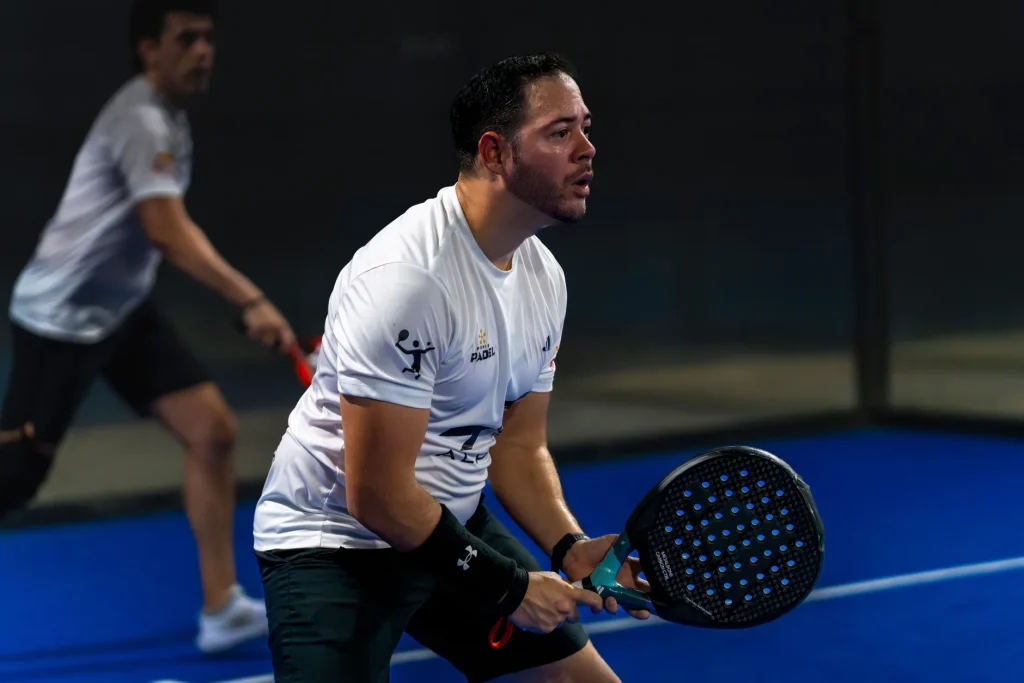
What Rain Changes on a Padel Court
Rain changes the game in ways that matter tactically. If you try to play your dry-weather shots at dry-weather speed, you will probably miss more, slip more and blame the racket more than it deserves.
The ball gets heavier and slower
Once the felt gets wet, the ball picks up weight. It comes off the racket with less zip, loses bounce after hitting the turf, and can feel dead on volleys. Old balls make this worse. A fresh tube of Head, Bullpadel, Wilson or Adidas padel balls is usually £5-£8 in the UK, and wet play is one of the few times I would open a new tube rather than persevering with tired balls from last month.
Keep a spare tube dry in your bag. If the first set becomes waterlogged, swap them or call it. A soaked ball is not character-building; it is just bad data for your timing.
The glass becomes less generous
Wet glass can make the ball slide down or rebound lower than expected. Shots that usually sit up nicely off the back wall may stay low. Side-glass angles become harder to read because water and dirt interrupt the contact.
That affects defence more than attack. If you rely on letting everything come off the back glass, rain forces you to take more balls earlier, block more simply and stop waiting for perfect rebounds.
The turf slows and grips differently
Outdoor padel turf is designed to drain, but it is not magic. Sand distribution, court age, maintenance and temperature all change how the surface behaves. A newer court may drain quickly; an older corner with compacted sand can stay slick for the whole session.
This is where previous court knowledge helps. If your club has one outdoor court that always puddles in the back-left corner, treat it as a no-go zone. If you are booking somewhere new, arrive ten minutes early and look before everyone has paid and warmed up.
The game becomes lower risk
Wet padel rewards margin. You want more balls through the middle, fewer hero angles, and less chasing of impossible rebounds. It is not as spectacular, but it is often better padel because you have to choose properly.
If your normal style is big viboras, rushed bajadas and jumping smashes, rain will expose you. That is not a reason to sulk. It is a useful training session in patience.
Wet-Court Warm-Up and Safety Checks
The warm-up should tell you whether the court is safe enough and how the ball is behaving. Do not use the first two games as the experiment.
Start slower than usual
Begin with mini-padel near the service line. Use soft blocks, gentle volleys and controlled groundstrokes. Then move back and test the glass at 50% pace. You are checking the court, not showing everyone your range.
Use this order:
- Short volleys and blocks near the net.
- Gentle groundstrokes from the service line.
- Controlled back-glass rebounds.
- Side-glass feeds at low speed.
- A few serves at match height, not full pace.
If anyone slips during that warm-up, take it seriously. A warm-up slip is a warning, not a funny little moment to ignore.
Test braking, not just running
Most wet-court injuries happen during stopping and turning, not gentle jogging. Test small split steps, side shuffles and a controlled stop after two or three quick steps. If you cannot brake safely, you cannot play safely.
This matters more for older players, heavier players and anyone carrying ankle, calf or knee niggles. Padel already asks for quick cuts. Rain adds uncertainty.
Agree the rules with the group
Before the match starts, agree how you will handle worsening rain. That saves arguments later.
A sensible group agreement might be:
- Light drizzle: continue if grip and bounce are still safe.
- Heavy rain: pause for five minutes and reassess.
- Standing water: stop and speak to the club.
- One player uncomfortable: pause without debate.
- Ball waterlogged: change balls once, then rebook if it keeps happening.
That sounds formal, but it stops the classic British sports problem: everyone quietly hates the conditions while pretending to be fine.
How to Adjust Your Shots in the Rain
Wet padel is not about hitting harder to force the court to behave. It is about simplifying. You want to reduce the number of shots that depend on perfect footing, perfect glass rebounds or perfect ball speed.
Serve with more margin
In rain, serve placement matters more than pace. Use a controlled underarm serve that clears the net comfortably and lands deep enough to keep the receiver honest. If the glass is wet, a body serve or serve towards the side wall can still be awkward, but do not chase the sideline.
If you need a rules refresh, our padel serve technique guide covers the normal serve mechanics. In the rain, take the same legal action and dial the risk down.
Aim through the middle
Middle balls are your friend. They reduce angles, force communication, and avoid asking the ball to skid off wet side glass. A firm, medium-height ball between opponents often wins more points than a clever shot into a wet corner.
For club doubles, the best wet-weather target is often the seam between players. Not too hard, not too low, just awkward enough that someone has to decide.
Take fewer balls off the back glass
If the back glass is wet, move forward earlier and block. Do not keep waiting for the ball to come out as it would on a dry evening. It may stay low, skid down or come off with less pace.
This links directly with our how to use the glass walls in padel advice: glass is useful only when you can read it. In rain, the reading becomes less reliable, so your first adjustment is earlier contact.
Reduce lobs unless you have control
The lob is still valuable, but wet balls and damp grips make timing harder. Use higher, safer lobs with more court margin. Avoid low attacking lobs that depend on perfect lift. If the ball is heavy, you may need a slightly bigger swing, but keep the finish controlled.
If you do lob, recover early. A wet court is a bad place to admire your work and then scramble backwards.
Be careful with smashes and kick
The spectacular smash is usually a poor wet-weather percentage shot. The ball is heavier, your footing is worse, and the rebound off glass is less predictable. Unless the ball sits up cleanly, use a controlled bandeja or vibora-style shape instead.
Our padel shot guide covers those shots in normal conditions. In rain, the practical version is simpler: hit with balance, use depth, and avoid full-body violence when your feet are not secure.
Footwork, Shoes and Grip in Wet Conditions
Rain makes footwork less forgiving. Good shoes help, but careful movement matters more than buying the most expensive pair in the shop.
Use padel or clay-style soles
For outdoor artificial turf, a herringbone or padel-specific sole usually gives better grip than a smooth all-court tennis shoe. Decathlon padel shoes often start around £45-£65, while Asics, Adidas, Babolat and Nox models commonly sit around £70-£130. Premium shoes can reach £150+, but price alone does not make them right for your court.
If you play mostly outdoors in the UK, I would prioritise grip and lateral support over soft cushioning. A plush running-style sole feels nice in the shop and then folds under you when you cut sideways. Our padel shoe sole types guide goes deeper on that choice.
Shorten your steps
Long lunges are risky on wet turf. Use shorter adjustment steps, keep your centre of gravity lower, and accept that you will not reach every ball. The best rainy padel players look boring because they are rarely off balance.
A useful cue is “arrive slower”. Sprinting to the ball is not the clever bit; stopping under control is.
Keep your grip dry
Wet overgrips turn good technique into guesswork. A tacky overgrip like Wilson Pro, Head Prime Tour or Nox Pro is usually about £5-£9 for a three-pack. In rain, I prefer a fresh grip before the session rather than trying to rescue a shiny old one with a towel.
Carry a small microfibre towel. A basic sports towel costs £6-£15 from Decathlon, Sports Direct or Amazon UK. Wipe your hand and handle between changeovers. If the grip is slipping during points, stop pretending it is fine.
Protect the racket
Padel rackets do not love wet conditions. A little drizzle will not destroy a racket instantly, but repeated wet sessions, damp storage and water around frame chips are not clever. Frame protectors cost roughly £5-£12 and are worth fitting if you play outdoors often, but they do not waterproof the racket.
After play, dry the racket with a towel and leave it out of the bag at home for a while. Do not seal a damp racket, damp shoes and wet towel together in the boot of the car. That smell has ambition.
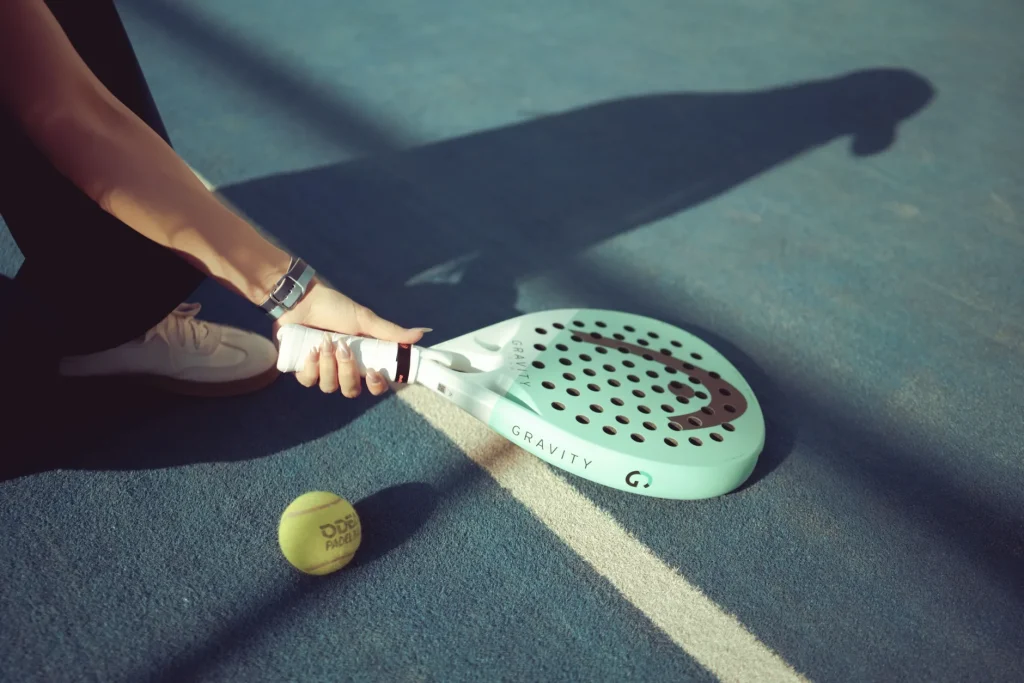
What to Pack for Rainy Padel
You do not need a separate rain-only padel wardrobe. You need a small, practical kit that keeps the ball, grip and your hands dry enough to play safely.
The useful wet-weather kit
For UK club players, this is the sensible list:
- Microfibre towel: £6-£15; one for hands and racket, not your post-match shower.
- Spare overgrip: £2-£3 per grip if bought in multipacks.
- Fresh balls: £5-£8 per tube; keep one dry until needed.
- Light waterproof layer: £25-£70; useful before and after play, not ideal during hard rallies.
- Spare socks: £5-£12; underrated if the court edge or walk back is wet.
- Plastic bag or dry pouch: cheap, but saves the rest of your kit from a wet towel.
If you already use a dedicated padel bag, keep a dry pocket for grips and balls. Our padel accessories checklist covers the broader kit, but for rain I would rather have two dry towels than another gadget.
Clothing that works in drizzle
Wear layers you can remove. A lightweight training top, shorts or leggings, and a thin shell for waiting around usually works better than a heavy waterproof jacket. Once you are playing, heavy waterproofs trap heat and restrict movement.
For colder wet sessions, our padel in winter clothing guide is more relevant. Rain alone is about grip and dryness; cold rain is about staying warm enough between points without turning sluggish.
What not to bring
Avoid cotton hoodies during play. They get heavy, stay wet and make movement clumsy. Avoid old running trainers with worn soles. Avoid cheap fashion caps that drip into your eyes. And do not bring one towel for everything unless you enjoy wiping your racket with something that already lived on the changing-room floor.
Small details make wet padel less miserable. None of them are expensive; most are just preparation.
When to Move Indoors or Rebook
Sometimes the best way to play padel in the rain is to not play outdoors. That sounds obvious, but plenty of players keep going because the court is booked and everyone has driven there.
Indoor courts are worth the premium in bad weather
Indoor padel courts in the UK often cost around £32-£56 per hour depending on location, peak time and membership. Split four ways, that is usually £8-£14 each. Outdoor courts can be cheaper, but a rained-off or half-speed session is not great value if nobody trusts the surface.
If bad weather is forecast and you have a competitive match, lesson or first-time game with new players, book indoors if you can. For casual hits, check the club cancellation policy before you pay. Some venues let you move bookings if courts are unsafe; others are stricter if the court is technically open.
The Met Office weather warnings page is worth checking before outdoor bookings during stormy spells because rain is not the only issue. Thunderstorms, strong wind and extreme heat can all change whether an outdoor court is sensible.
Ask the club rather than guessing
Good clubs know their courts. Ask which outdoor courts drain best, where puddles form, and whether staff are happy for play to continue. If the venue says a court is unsafe, accept it. If they say it is playable but your group is slipping, stop anyway.
If you booked through an app, take photos of standing water before contacting support. Keep it factual: court number, time, condition, and whether staff advised stopping. You are more likely to get a useful response than if you send a furious essay from the car park.
Rain can still be a useful practice session
If conditions are damp but safe, use the session deliberately:
- Practise middle targets rather than low-percentage angles.
- Work on controlled serves with higher net clearance.
- Take balls earlier instead of relying on wet glass.
- Improve communication because wet conditions punish hesitation.
- Train patience when the ball does not reward flashy shots.
That is the right mindset. You are not playing worse padel; you are playing a different version. The winner is usually the pair who accepts that first.
Frequently Asked Questions
Can you play padel in light rain? Yes, if the court is draining, there is no standing water, players can stop safely, and the ball still bounces predictably. Light drizzle is often playable; heavy rain or slick patches are not worth the injury risk.
Does rain damage a padel racket? Occasional drizzle is unlikely to ruin a racket instantly, but repeated wet play and damp storage can shorten its life, especially if the frame has chips. Dry the racket after play and do not leave it sealed in a wet bag.
What shoes are best for wet padel courts? Padel-specific or herringbone clay-style soles usually grip better on artificial turf than worn running shoes or smooth all-court trainers. Expect to pay about £45-£130 for solid UK options.
How does rain affect padel balls? Wet balls get heavier, slower and less lively. They come off the racket with less pace and bounce lower from the turf and glass. If a ball becomes soaked, change it or stop the session.
Should you use the glass walls in wet padel? Use them more cautiously. Wet glass can make rebounds lower and less predictable, so take more balls early and avoid relying on perfect back-wall bounces.
Is indoor padel better when rain is forecast? For lessons, matches and competitive games, yes. Indoor courts cost more, often about £8-£14 per player per hour when split four ways, but they remove the biggest weather variables.