Padel ball pressure is one of those small details that changes a match more than most players expect. A fresh tin can make the ball leap off the glass and reward a clean vibora. A tired set can turn the same shot into something soft, low and easy to counter. If you have ever blamed your racket, the court or your timing, the balls may have been part of the problem.
For UK club players, the question is usually practical rather than technical: are these balls still good enough for another match, or are they too dead? The answer depends on pressure, felt wear, temperature, court surface and the standard of play. Here is how pressure changes the game, how to judge it without laboratory kit, and how to adjust your tactics when the balls are lively or fading.
In This Article
- What padel ball pressure actually means
- How pressure changes bounce, speed and timing
- The signs a padel ball is too dead
- How long balls last after a tin is opened
- Temperature, weather and UK conditions
- Court surface makes pressure more noticeable
- Tactical changes with lively balls
- Tactical changes with dead or fading balls
- Storing balls and using pressure savers
- Buying balls without wasting money
- A practical way to decide if the balls are still playable
- Frequently Asked Questions
What padel ball pressure actually means
The official baseline is the FIP rules of padel, while the LTA padel guidance is a useful UK reference for players getting used to the sport. For buying choices, our guide to the best padel balls in the UK compares common options.
A padel ball is a pressurised rubber core covered in felt. The pressure inside the ball helps it rebound after it hits the court, the racket or the glass. As the ball is used, tiny amounts of air escape through the rubber and the felt becomes more worn. The ball loses some of its spring and the rebound becomes lower and slower.
Padel balls look very close to tennis balls, but they are not quite the same in how they are specified and how they play. Under the international rules, padel balls must meet limits for weight, size, colour, pressure and bounce. For most club players, the practical point is simple: once pressure drops, bounce and glass rebound change quickly.
In normal player terms, you do not need to measure internal pressure in a workshop. You need to know how the ball behaves. A ball with good pressure comes off the racket with a lively, clean feel and rebounds high enough for normal patterns of play. A ball that has lost pressure feels dull, sounds flatter and does not climb off the court or the back glass in the same way.
Pressure is not the only factor. A ball with decent internal pressure but badly worn felt can skid, fly oddly or feel too quick through the air. A ball with fluffy, wet felt can feel heavy even if it was opened that day. That is why players often say a ball is dead when they really mean a mix of low pressure, worn felt, moisture and age.
How pressure changes bounce, speed and timing
The simplest effect of pressure is bounce height. More internal pressure means the ball deforms and springs back more strongly when it hits the surface. Less pressure means it absorbs more energy and rebounds less. In padel, where so many decisions are based on whether the ball will reach the glass, climb after the glass, or sit up for a volley, that difference is huge.
With livelier balls, serves can kick up more, lobs travel deeper, and bandejas or viboras are more likely to push opponents back. The ball also rebounds more strongly from the back wall, so defenders have a little more time and height to work with if they read it well. Attacking players may find it easier to bring the ball back towards their own side after a smash, especially indoors or on a faster court.
With lower-pressure balls, the court feels smaller in some ways and bigger in others. The ball does not jump as high, so low volleys and chiquitas can stay awkward. At the same time, finishing points can become harder because smashes and kick smashes lose bite. More balls die near the back wall rather than popping out into a comfortable contact height.
Timing also changes. A fresh ball reaches you sooner after the bounce, particularly on a quick court. A tired ball gives a softer contact but can force you to bend more and play from below net height. Many mishits in the last set of a social match come from players using the swing and contact point they had with the first-set balls.
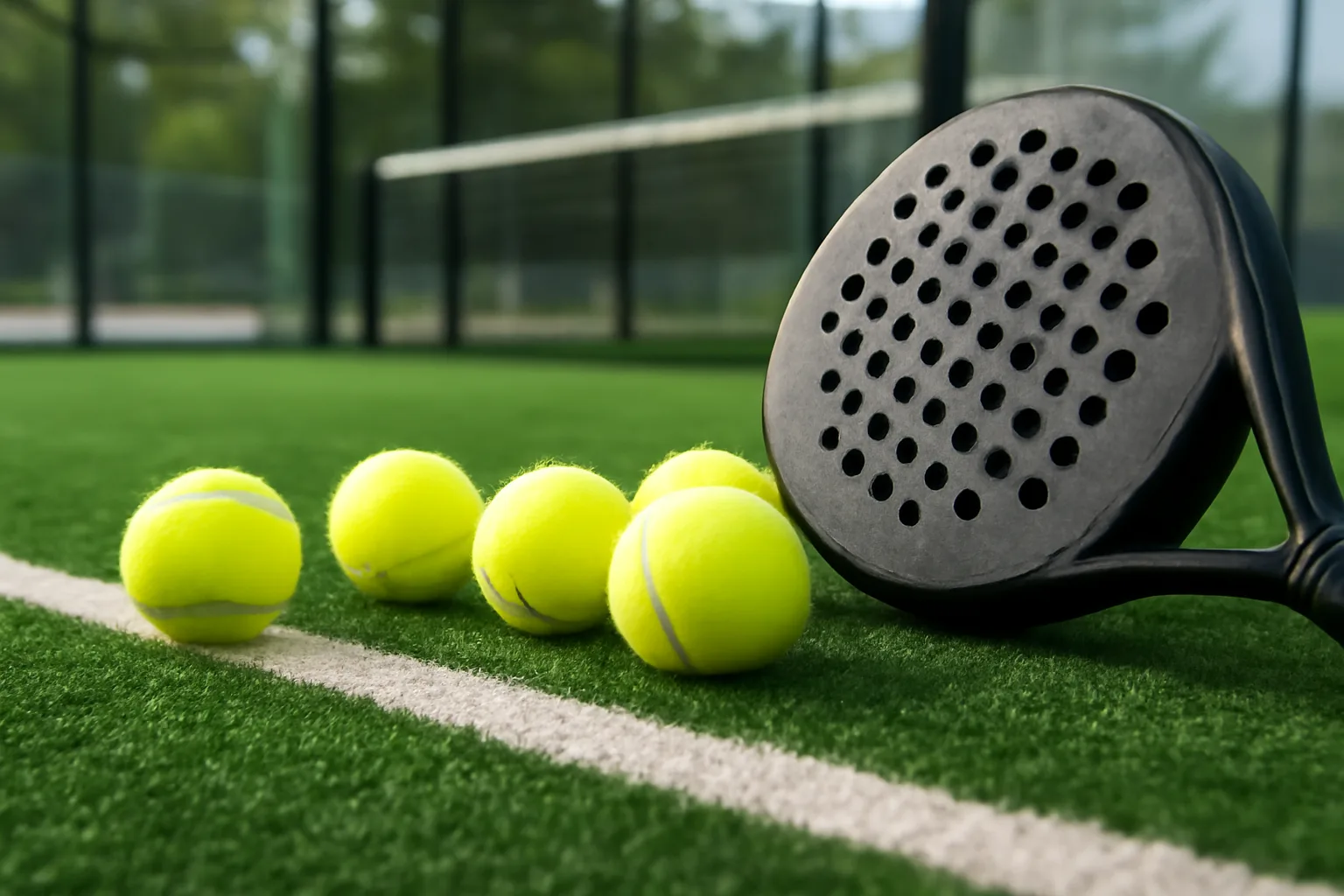
The signs a padel ball is too dead
There is no single perfect test during a club night, but there are reliable signs. You are looking for a pattern, not one strange bounce off a seam or a damp patch.
- The sound is dull rather than crisp when struck cleanly.
- The ball drops short from normal lobs even when your technique feels unchanged.
- It does not rebound far enough from the back glass, so defensive shots must be dug out from low positions.
- Serves that usually kick into the side glass start sitting up or dying before the glass.
- Smashes and hard bandejas feel heavy, with little reward for good racket speed.
- The felt looks bald, dirty, very fluffy or uneven.
- Different balls from the same set behave noticeably differently in the same rally.
A useful court-side comparison is to take a new ball and the suspected dead ball, hold them at the same height and drop them onto a dry, firm part of the court. You are not trying to conduct an official test; you are checking whether one ball is obviously lower and flatter. If the old ball rebounds much less, it is unlikely to give fair or enjoyable play.
Another clue is player behaviour. If all four players keep overhitting routine lobs or underhitting routine volleys, that may be technique or wind. If the same group suddenly cannot get the ball through the court, cannot finish overheads and keeps playing ankle-height rebounds from the back glass, the balls are probably fading.
How long balls last after a tin is opened
Once a tin is opened, the clock starts. Even if you only play a few games, pressure begins to equalise with the outside air. A set that feels fine on Monday may feel noticeably softer by the weekend, especially if it has been left loose in a racket bag or in a car.
For many UK recreational players, a fresh tin is at its best for one proper match or one hard training session. It may still be acceptable for a second casual hit, serving practice or coaching drills, but it will not feel the same. Stronger players tend to notice the drop sooner because their shots rely more on spin, rebound and consistent depth.
As a rough guide, a new tin is sensible for league matches, box league finals, tournaments and serious practice where you care about shot quality. Previously used balls can be fine for warm-ups, beginner sessions, kids’ games and basket-style drills where volume matters more than perfect bounce.
If you are choosing balls for regular play, it is worth comparing durability as well as price. Our guide to the best padel balls in the UK looks at options that suit club matches, faster indoor courts and everyday training.
Temperature, weather and UK conditions
Pressure is affected by temperature. Cold balls feel softer and rebound less because the air inside is less energetic and the rubber is less responsive. On a cold evening in Manchester, Glasgow or Leeds, a ball that was lively indoors may feel slower outside. You may need to accept a lower bounce or open a fresher tin if the match matters.
Heat has the opposite effect. In a warm indoor centre or on a rare hot summer day, balls can feel bouncier and quicker. That can make lobs harder to control and smashes more dangerous if players are not used to the extra rebound. The same brand of ball can seem completely different in January and July.
Moisture is just as important in the UK. Damp felt becomes heavier, picks up sand and loses speed. A damp ball can feel dead even if its internal pressure is acceptable. It may skid from the glass, slow sharply after the bounce, or come off the racket with a heavy thud. If the court is wet or the glass is greasy, ball behaviour becomes less predictable and player safety should come first.
Do not try to dry padel balls on radiators or with direct heat. You can damage the rubber and make them inconsistent. If balls are wet enough to affect play, swap them or save the session for drills where consistency matters less.
Court surface makes pressure more noticeable
Surface changes can make the same tin feel different from venue to venue. Our guide to padel court surfaces explains why sand, carpet texture and outdoor damp can exaggerate pressure loss.
A ball does not bounce in isolation. The court surface changes how pressure feels. On some artificial turf courts with more visible sand, the ball can slow and sit down. On newer, faster surfaces, a fresh ball may skid through more quickly and jump off the glass.
This is why two players can disagree about the same tin. On a slow outdoor court, they may say the balls are dead after half an hour. On a dry, faster indoor court, the same balls might still feel playable. Neither player is necessarily wrong; they are judging the ball in a different environment.
If you play at several venues, build your expectations around the surface. A slightly tired ball on a quick indoor court might still produce a fair rally. The same ball on a damp, sandy court may make the game scrappy and low. For a fuller explanation of how turf, sand and court speed affect play, see our guide to padel court surfaces.
Pressure also affects glass play. A lively ball that reaches the back wall can rebound into a comfortable hitting zone. A tired ball may die after the glass and force you to scoop. Players learning to use the walls sometimes think they have read the ball badly when the real issue is that the ball no longer has enough bounce to behave normally.
Tactical changes with lively balls
Fresh, lively balls reward positive positioning, but they also punish lazy depth control. If the ball is bouncing high, do not assume every attacking shot is easier. Lobs can drift long, serves can rebound into a comfortable return, and hard volleys can come back quickly from the glass.
On lively balls, use height with purpose. A deep lob that pushes opponents behind the service line is valuable, but a loose lob can sit up for an overhead. Aim for shape rather than panic height. From the net, keep volleys compact and controlled; fresh balls already provide pace, so you do not need to swing as hard.
Overheads become more rewarding, especially if you can hit with spin. A bandeja can hold opponents back, and a well-hit kick smash has a better chance of climbing. Still, UK club players should be careful not to turn every overhead into a full-power smash. If the ball is lively and the court is quick, placement into corners and feet often beats showing off.
Defensively, expect a stronger rebound from the back glass. Give yourself space, let the ball come out when appropriate, and avoid rushing forward too early. If you are teaching newer players, lively balls can help them experience wall rebounds properly, but they may also make the game feel fast.
Tactical changes with dead or fading balls
With fading balls, you need more leg work and less assumption. The ball will not rise as much, so prepare lower and contact it in front. If you wait for the same bounce you had at the start of the match, you will be late or cramped.
At the net, dead balls can help you if you stay disciplined. A firm volley into the feet may stay low and force a weak reply. Drop volleys and soft angles can be effective because the ball does not spring up. The risk is overplaying: if you try to hit through opponents with a ball that has lost pressure, you may feed them comfortable blocks.
From the back, choose lobs carefully. You often need a fuller swing and better use of the legs to achieve the same depth. If the ball is damp or low-pressure, a half-hearted lob will hang short. Chiquitas can work well because they stay low, but they need enough margin to clear the net.
Overheads are where many players get frustrated. A dead ball rarely rewards a heroic smash unless the sitter is very clear. Use bandejas, controlled viboras and placement towards the side glass. If opponents are expecting power that never arrives, a slower, deeper overhead can be more effective than a flat hit that rebounds nicely for them.
Storing balls and using pressure savers
Pressure savers are only one part of the kit picture. If you are building a bag sensibly, see our padel accessories checklist and budget padel accessories guide. For family sessions, teaching kids padel also explains why livelier balls are not always the easiest option.
You cannot stop padel balls ageing, but you can slow the drop-off. Keep opened balls in a proper tube or pressure saver rather than loose in the bottom of a bag. Store them at room temperature where possible, away from radiators, car boots and damp sheds. Big temperature swings are unhelpful.
Pressure-saving tubes can be useful for club players who open a tin for a one-hour hit and want the balls to remain decent for another session. They are not magic. They can help preserve pressure, but they will not repair worn felt, remove damp, or make a heavily used ball play like new.
If you are building a padel bag for regular play, include a spare tin for matches and use older balls for warm-up or drills. Our padel accessories checklist covers the small items that make sessions smoother, including grips, towels and storage. If cost is the main concern, the budget padel accessories guide is a sensible place to find low-cost kit without buying things you will not use.
For clubs and families, separate balls by purpose. Match balls, coaching balls and child-friendly practice balls do not need to be the same standard. If you are introducing children to the game, softer or older balls can be useful for control and confidence, as long as the session is safe and the bounce is suitable. Our guide to teaching kids padel has more on making early sessions enjoyable.
Buying balls without wasting money
The cheapest ball is not always the best value. If a budget tin loses pressure very quickly, you may use more tins across a month than you would with a slightly better ball. On the other hand, expensive tournament balls are unnecessary for every beginner drill or casual family hit.
Match the ball to the use. For competitive play, buy a reliable ball with a consistent bounce and open it close to the start of the match. For weekly social padel, choose a durable ball that remains acceptable for a second session. For coaching, you may want a larger basket of training balls, accepting that they will not all play like fresh match balls.
If you play mostly outdoors in the UK, pay attention to felt durability and damp-weather behaviour. If you play indoors on quick courts, you may prefer a ball that is controlled rather than wildly lively. Regular players should also consider buying multi-packs, but only if they will store them properly and use them within a sensible time.
Avoid mixing very old balls with new ones in the same game. It makes rallies unfair and can confuse timing. If you are short of balls, use three that are at least similar in age and condition. Consistency matters more than squeezing one extra rally out of a ball that no longer behaves like the others.
A practical way to decide if the balls are still playable
Before a serious match, use a fresh tin. That removes doubt and avoids arguments. For social play, make a common-sense decision based on bounce, feel and fairness. If the ball is so flat that rallies are no longer representative of normal padel, change it.
A ball is usually still playable for casual use if it rebounds reasonably, sounds clean, and all balls in the set behave similarly. It is better kept for drills if it has lost some height but remains safe and predictable. It should be retired from proper play if it is very low-bouncing, wet, split, badly bald or inconsistent compared with the others.
Player level matters. Beginners can learn basic movement and contact with older balls, provided the bounce is not ridiculous. Intermediate and advanced players need better consistency because their tactics depend on glass rebound, spin and controlled depth. A dead ball can turn good padel into a guessing game.
The fairest test is the match itself. If both pairs agree the balls are spoiling the rally quality, change them. If one pair only complains after losing points, be careful. Ball pressure affects everyone, but it may favour one style over another. Lively balls often help attacking overhead players; fading balls can help defenders and players with low, tidy volleys. That is part of padel, as long as the balls remain within a reasonable playing condition.
Frequently Asked Questions
How quickly does padel ball pressure drop after opening a tin? It starts dropping as soon as the tin is opened. Many club players find balls are at their best for one match or one hard training session, then acceptable for casual play or drills. Storage, temperature, court surface and how hard you hit all affect the speed of decline.
Are padel balls meant to bounce less than tennis balls? Yes, padel balls are specified differently and generally play with a slightly lower, more controlled bounce than tennis balls. They look similar, but using tennis balls for padel changes the feel of rallies, wall rebounds and overheads.
Can a pressure saver make dead padel balls new again? No. A pressure saver can help slow pressure loss after opening, especially if the balls have not been used much. It cannot restore worn felt, fix damp balls or make heavily used balls behave like a fresh tin.
Why do my padel balls feel dead in winter? Cold air and cold rubber reduce bounce, so balls often feel softer on winter evenings, particularly outdoors. Damp felt also makes the ball heavier. A fresher tin may help, but cold and wet conditions will still slow the game.
Should I change balls during a league match? If the competition rules specify ball changes, follow them. For ordinary club league matches, it is best to start with a new tin and continue unless a ball is damaged, wet or behaving very differently from the others. Agree any change with the other pair to avoid disputes.
Do dead balls make rallies longer or shorter? They can do either. Dead balls may make finishing harder because smashes and overheads lose bite, which can lengthen rallies. They can also shorten rallies if the ball dies low off the glass and players cannot lift it cleanly. The effect depends on level, surface and tactics.