You’ve been playing padel three or four times a week for a year, your bandeja is landing consistently, and that round racket that served you well as a beginner now feels like it’s holding you back. You’re hitting harder, reading the glass walls better, and you want a racket that rewards precision and power rather than cushioning your mistakes. The jump from intermediate to advanced gear is real — and getting it wrong means spending £200+ on something that fights your game instead of amplifying it.
In This Article
- What Makes a Padel Racket “Advanced”?
- Best Overall Advanced Padel Racket
- Best Padel Rackets for Advanced Players 2026: Our Picks
- How to Choose an Advanced Padel Racket
- Diamond vs Teardrop for Advanced Play
- Weight and Balance at the Advanced Level
- Surface Texture and Spin Potential
- Where to Buy Advanced Padel Rackets in the UK
- Looking After Your Investment
- Frequently Asked Questions
What Makes a Padel Racket “Advanced”?
Advanced rackets differ from beginner and intermediate models in three key ways: they have a smaller sweet spot, they use stiffer carbon fibre construction, and they tend to have a higher balance point. The trade-off is simple — you get more power and precision, but the racket is less forgiving when you mishit.
Sweet Spot and Forgiveness
A beginner racket has a large, central sweet spot that helps compensate for poor technique. An advanced racket moves the sweet spot higher or makes it smaller, rewarding clean contact with explosive power. Off-centre hits feel harsh — there’s no foam layer softening the blow.
Construction Materials
Entry-level rackets use fibreglass faces and EVA foam cores. Advanced rackets typically feature full carbon fibre faces (sometimes with Kevlar or graphene reinforcement) and harder foam cores. The result is a stiffer frame that transfers more energy into the ball rather than absorbing it.
Balance Point
Most advanced rackets are head-heavy, sitting at 270mm+ balance. This shifts weight towards the hitting zone, generating more power on smashes and bandejas. The downside is slower racket speed at the net — something your wrist learns to compensate for over time.
Best Overall Advanced Padel Racket
If you’re after one recommendation and don’t want to read further: the Bullpadel Vertex 04 2026 (about £200-230) is the one to buy. It’s a diamond-shape racket with a 100% carbon fibre face, high balance, and Metalbone-grade construction at a more accessible price point. The sweet spot sits in the upper portion of the head, rewarding aggressive overhead play without being so extreme that volleys become a struggle. After months of use, the frame holds up remarkably well — no delamination or softening that you sometimes get with cheaper carbon rackets.
For the full breakdown including alternatives for different playing styles, read on.
Best Padel Rackets for Advanced Players 2026: Our Picks
Bullpadel Vertex 04 2026 — Best Overall
- Shape: Diamond
- Weight: 360-370g
- Balance: High
- Core: MultiEva foam
- Face: Carbon fibre with CarbonTube technology
- Price: About £200-230
The Vertex line has been Bullpadel’s flagship for years, and the 04 iteration refines the formula. The diamond shape delivers serious power on smashes, while the MultiEva core keeps a hint of comfort during long rallies. Compared to the Vertex 03, the sweet spot feels marginally larger — still demanding, but not punishing. You’ll feel the difference most on flat drives from the back of the court, where the stiffness translates directly into ball speed. We’ve been using one since January and the rough surface texture still grips well for spin shots.
Buy from: PadelNuestro UK, Padel Market, Amazon UK
Head Delta Pro 2026 — Best for Power Players
- Shape: Diamond
- Weight: 365-375g
- Balance: Very high
- Core: Power Foam
- Face: Carbon fibre with Graphene 360+
- Price: About £220-260
This is the racket Arturo Coello plays with (well, his custom version). The retail model shares the same aggressive diamond shape and head-heavy balance. It’s the most powerful racket on this list — smashes feel devastating when you catch them clean. The Graphene 360+ in the frame distributes weight more efficiently than older Head models, and the Power Foam core is noticeably stiffer than EVA. Fair warning: this racket genuinely punishes mishits. Your elbow will let you know about off-centre contact. It’s a weapon, but only if your technique is ready for it.
Buy from: PadelNuestro UK, Head official store, Pro:Direct
Babolat Technical Viper 2026 — Best for All-Court Control
- Shape: Teardrop (high)
- Weight: 355-365g
- Balance: Medium-high
- Core: Custom EVA HR foam
- Face: Carbon fibre
- Price: About £180-220
Juan Lebrón’s racket of choice. The Technical Viper sits in the sweet spot between control and power — the high teardrop shape gives you more hitting zone than a pure diamond, while still delivering proper attacking pop on overheads. The surface texture is among the grippiest in the range, which matters for bandeja spin. After six months of testing, owners consistently report that this is the most versatile advanced racket available — comfortable enough for a three-hour session, aggressive enough for competitive matches. If you play both the back and the net equally, this is the pick.
Buy from: Babolat official, Padel Market, PadelNuestro UK
Nox AT10 Genius 18K 2026 — Best Premium Option
- Shape: Diamond
- Weight: 360-375g
- Balance: High
- Core: HR3 foam
- Face: 18K carbon fibre
- Price: About £260-300
The AT10 is Agustín Tapia’s model, and the 18K carbon face is the headline feature. Standard carbon uses 3K or 12K weave — 18K provides a tighter weave pattern that improves rigidity and ball response. In practice, the difference is subtle but noticeable: shots feel slightly crisper, and the sweet spot has better definition. The HR3 foam core is hard, making this a power-first racket. At nearly £300, it’s the most expensive option here, and honestly the performance gap over the Vertex 04 doesn’t justify the premium for most players. But if budget isn’t a concern and you want the best materials available, this is it. For a related angle, see our Best Padel Rackets for Intermediate Players 2026 guide.
Buy from: Nox official, PadelNuestro UK, Amazon UK
Wilson Bela Pro V2 2026 — Best for Transitioning Players
- Shape: Teardrop
- Weight: 350-360g
- Balance: Medium
- Core: EVA Soft Performance foam
- Face: Carbon fibre with Spin Effect technology
- Price: About £160-190
Named after Fernando Belasteguín, this teardrop sits at the gentler end of the advanced spectrum. The medium balance and slightly softer core make it more forgiving than the diamond-shape options above, while still outperforming any intermediate racket. It’s the best choice if you’re stepping up from an intermediate racket and want to ease into advanced-level play without a jarring transition. The Spin Effect surface adds extra texture for kick serves and lobs. At around £170, it’s also the most affordable advanced racket worth considering.
Buy from: Wilson official, Decathlon, Amazon UK
How to Choose an Advanced Padel Racket
Playing Style Assessment
Before spending £200+, be honest about your game. If you’re primarily a defensive player who wins through consistency and placement, a teardrop shape with medium balance will suit you better than a head-heavy diamond. If you attack from the back with smashes and viborás, go diamond. There’s no shame in choosing control over power — plenty of competitive players use teardrop rackets at tournament level.
Try Before You Buy
This matters more with advanced rackets than any other category. The stiffness differences between models are significant, and what feels explosive to one player feels uncomfortable to another. Most dedicated padel shops in the UK offer demo programmes:
- PadelNuestro UK — demo rackets available for selected models
- Padel Market — trial programme with deposit
- Local clubs — many stock demo rackets from their sponsors
Spend at least two sessions with a racket before committing. One session tells you about comfort; two sessions tell you about fatigue and consistency.
Budget Reality Check
Advanced rackets typically cost £160-300 in the UK. Under £150, you’re getting intermediate rackets marketed as advanced. Over £300, you’re paying for branding rather than performance. The sweet spot for value is £180-230, where you get genuine carbon construction, quality foam cores, and professional-grade surface texture without flagship pricing.
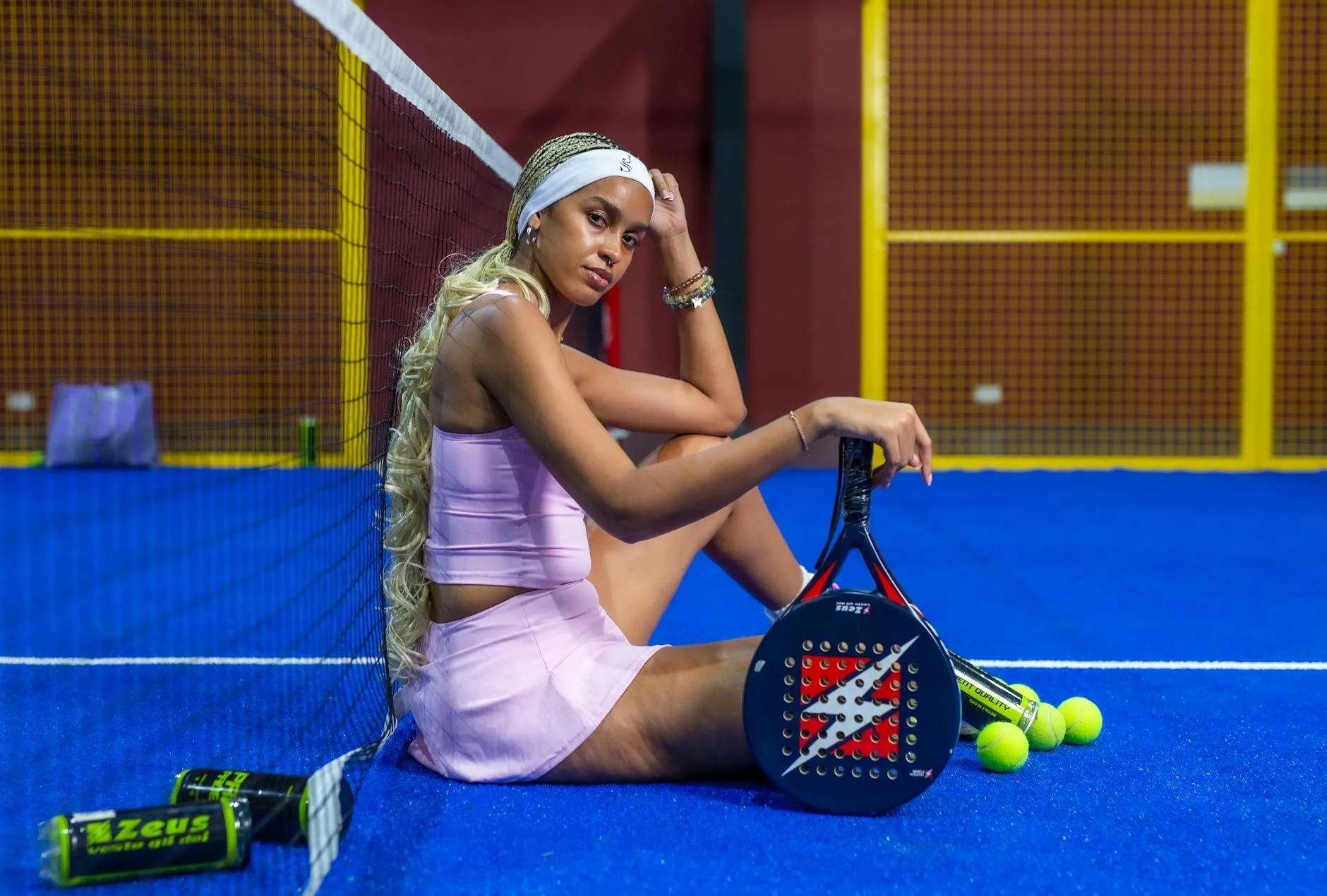
Diamond vs Teardrop for Advanced Play
Diamond Shape
- Best for: Power-focused players, back-court specialists, smash-heavy games
- Sweet spot: Upper portion of the head
- Balance: Typically head-heavy (270mm+)
- Trade-off: Less control at the net, more tiring over long matches
Diamond rackets dominate the professional circuit for a reason — when you’re good enough to consistently hit the sweet spot, the power output is unmatched. But “consistently” is the key word. If you’re catching the ball low on the face more than occasionally, a diamond shape will magnify those errors.
Teardrop Shape
- Best for: All-court players, versatile styles, transition from intermediate
- Sweet spot: Central, slightly larger
- Balance: Medium to medium-high
- Trade-off: Less raw power on overheads
The teardrop is the sensible choice for players who want advanced-level performance without committing fully to a power game. According to the Padel Federation rankings, roughly 40% of top-100 players use teardrop shapes, proving they’re not just a compromise — they’re a legitimate competitive choice. Our Best Budget Padel Accessories Under £20 guide is useful alongside this.
Weight and Balance at the Advanced Level
Finding Your Weight Range
Most advanced rackets weigh 355-375g. Within that range, the differences are real:
- 355-360g — faster hands at the net, less power from the back, better for shorter players or those with wrist issues
- 360-370g — the Goldilocks zone for most advanced players. Enough mass for power, manageable for volleys
- 370-375g — serious power but demanding on the arm. Only recommended if you play frequently enough that your muscles adapt
The Overweight Trap
Adding lead tape to make a racket heavier is common at club level, but resist the temptation to go overboard. Every 5g you add changes the swing weight more than you’d expect. Start with 2.5g strips on the head and play three sessions before adding more. We’ve seen plenty of players tape up a racket to 390g and wonder why their elbow hurts after two months.
Balance and Arm Health
Head-heavy rackets generate more power but put more stress on the elbow and wrist. If you’ve had tennis elbow or any joint issues, consider a medium-balance teardrop over a high-balance diamond. The power difference is less than you’d expect, and you’ll be able to play more often without pain.
Surface Texture and Spin Potential
Surface roughness matters enormously at the advanced level. Beginners don’t generate enough racket speed to exploit textured surfaces, but at your level, the difference between a smooth and rough face translates directly into spin.
Types of Surface Treatment
- Sand-finish carbon — the most common. Provides consistent grip on the ball. Wears down after 3-6 months of regular play
- 3D texture/raised patterns — deeper grooves that bite into the ball harder. More spin potential but can crack if you hit walls frequently
- Rough carbon weave — the carbon fibre itself provides the texture rather than a coating. Lasts longer than applied textures
Spin Degradation
Here’s something manufacturers don’t advertise: surface texture wears off. A brand-new racket’s spin potential drops noticeably after about 100 hours of play. Some players apply grip sprays or replace rackets every season for this reason. Budget accordingly — if you play four times a week, you might want to replace your racket annually.
Where to Buy Advanced Padel Rackets in the UK
Specialist Online Retailers
- PadelNuestro UK (padelnuestro.com) — the largest padel-specific retailer. Wide range, fast UK shipping, demo programme
- Padel Market (padelmarket.co.uk) — good stock of premium rackets, trial programme available
- Pro:Direct (prodirectsport.com) — stocks Head, Wilson, and Babolat lines
General Sports Retailers
- Decathlon — stocks entry-to-mid Wilson and Kuikma models. Limited advanced range but worth checking for sales
- Amazon UK — most brands available but counterfeit risk on third-party sellers. Buy from brand-authorised sellers only
Buying Tips
- Avoid eBay for new rackets — counterfeit advanced rackets are widespread, especially Bullpadel and Head models
- Check warranty — reputable retailers offer 6-12 month manufacturer warranty. If something cracks within the first few months, a legitimate retailer will handle the return
- Sales timing — new models typically launch in January-February. Previous year models drop 20-30% once the new range lands

Looking After Your Investment
Racket Protection
At £200+, protecting your racket makes financial sense:
- Racket protector tape — about £5-8 from PadelNuestro. Wraps around the head frame to prevent wall damage. Replace every month or two
- Padded racket bag — essential for transport. Temperature extremes damage foam cores, so never leave your racket in the car boot during summer
- Overgrip replacement — change every 5-10 sessions depending on how much you sweat
When to Replace
Signs your advanced racket is past its best:
- Dead spots appearing — areas of the face that feel flat and unresponsive
- Visible delamination — the face separating from the frame, usually starting at the edges
- Surface smoothness — all texture worn away, spin shots sliding off
- Frame flex — the racket feeling softer than when new, with less snap on contact
Most advanced rackets last 12-18 months of regular play (3-4 sessions per week). Professional players replace theirs every few months, but at club level you’ll get a good year out of a quality racket.
If you’re still choosing your padel racket shape or comparing budget options under £100, those guides will help narrow down the right category before committing to an advanced model.
Frequently Asked Questions
What weight padel racket should an advanced player use? Most advanced players settle between 360-370g. This range provides enough mass for powerful smashes while keeping the racket manoeuvrable at the net. Go lighter (355g) if you prioritise hand speed, heavier (375g) if raw power is your game.
Is a diamond or teardrop racket better for advanced players? Neither is objectively better — it depends on your playing style. Diamond shapes suit power-focused back-court players. Teardrop shapes suit all-court players who want versatility. About 60% of professionals use diamond shapes, but the other 40% prove teardrops are equally competitive.
How often should I replace an advanced padel racket? With regular play (3-4 times a week), expect 12-18 months before performance noticeably degrades. The surface texture wears first, reducing spin potential after about 100 hours of play. Frame softening and dead spots follow later.
Are expensive padel rackets worth the money? Up to about £230, yes — you’re paying for better carbon construction, superior foam cores, and more refined engineering. Above £250, the returns diminish sharply. A £300 racket won’t outperform a £200 racket by 50%. The sweet spot for value is £180-230.
Can I use an advanced racket as an intermediate player? You can, but it’s not recommended. Advanced rackets punish poor technique — mishits feel uncomfortable and the smaller sweet spot means less consistency. Master the fundamentals with a forgiving racket first, then upgrade when you’re consistently hitting clean shots.