The Wilson AbsorbX Padel is the best padel overgrip here for players whose main problem is sweat. It is padel-sized, absorbent and sold in a practical three-pack. Choose the HEAD Padel Pro when you prefer a more familiar tacky feel, or Tourna Grip Original when your hands become very wet and ordinary tacky wraps turn slick.
Best Padel Overgrips at a Glance
Grip feel is personal, but the useful choice is simple: dry and absorbent wraps suit wetter hands; tacky wraps suit players who want the handle to feel secure with less squeezing. The table separates those jobs before the individual reviews.
| Overgrip | Verdict | Feel | Best for |
|---|---|---|---|
| Wilson AbsorbX Padel | Best overall for sweaty hands | Dry/absorbent | Heavy sweaters and warm indoor courts |
| HEAD Padel Pro | Best balanced padel grip | Tacky | Most club players |
| Palbea Extra Tacky 6-Pack | Best-value padel pack | Extra tacky | Regular changes on several rackets |
| Babolat Pro Tour 2.0 | Best for cushioned comfort | Tacky/comfort | Players wanting a softer 0.6mm wrap |
| Tourna Grip XL Original | Best true dry-feel option | Dry | Very sweaty hands and humid sessions |
| Tourna Mega Tac 10-Pack | Best maximum-tack option | Extra tacky | Players who want a locked-in feel |
If the base handle already feels too thick, remember that every overgrip adds material. Our overgrip versus replacement-grip guide explains which layer you should replace.
The Six Best Padel Overgrips
1. Wilson AbsorbX Padel — Best Overall for Sweaty Hands

AbsorbX is the most directly padel-focused dry option in this shortlist. Wilson describes it as ultra-absorbent and sized for a padel handle, while the black three-pack is useful for players who dislike a bright white grip looking dirty after one session.
Choose it when moisture is the problem rather than lack of stickiness. A dry-feel grip can seem less adhesive straight from the packet, but it is designed to stay manageable as your palm gets damp.
- Best for: Heavy sweaters and warm indoor courts.
- Feel: Dry/absorbent.
- Before buying: confirm pack quantity and colour on the current product page.
2. HEAD Padel Pro — Best Balanced Padel Grip
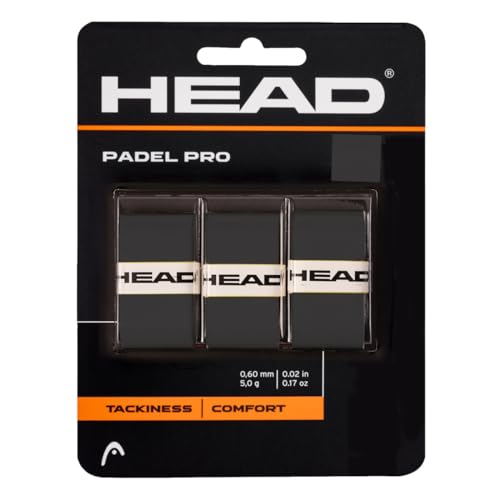
HEAD Padel Pro combines comfort with tack rather than chasing the driest or stickiest feel. That makes it the safest recommendation for a player who has not yet developed a strong preference and simply wants a fresh, secure wrap.
The trade-off is that a balanced grip may not satisfy a very heavy sweater or someone who wants an unusually adhesive surface. Buy it for predictability, not a specialist extreme.
- Best for: Most club players.
- Feel: Tacky.
- Before buying: confirm pack quantity and colour on the current product page.
3. Palbea Extra Tacky 6-Pack — Best-Value Padel Pack

Palbea supplies six padel overgrips and describes a tacky polyurethane surface with a cotton backing. The larger pack makes sense for households with several rackets or club players who replace a worn wrap promptly instead of trying to stretch it through another month.
Manufacturer claims about vibration reduction and durability should be treated as design claims rather than proof of injury prevention. The practical attraction is the padel-specific length, soft backing and lower commitment than a bulk reel.
- Best for: Regular changes on several rackets.
- Feel: Extra tacky.
- Before buying: confirm pack quantity and colour on the current product page.
4. Babolat Pro Tour 2.0 — Best for Cushioned Comfort

Babolat states a 0.6mm thickness and 110cm length for this Pro Tour 2.0 wrap. It is intended to provide cushioning and traction without an aggressively sticky surface, so it suits players who find thin, dry grips harsh during long sessions.
That extra cushioning also increases handle size slightly. If your fingers already struggle to wrap comfortably around the handle, choose a thinner grip rather than using comfort as the only criterion.
- Best for: Players wanting a softer 0.6mm wrap.
- Feel: Tacky/comfort.
- Before buying: confirm pack quantity and colour on the current product page.
5. Tourna Grip XL Original — Best True Dry-Feel Option

Tourna Grip Original is the specialist choice for very sweaty hands. Its dry fabric-like feel is deliberately different from glossy polyurethane tack, and the XL length gives enough material for racket handles when wrapped with sensible overlap.
It can feel almost papery when first fitted and may wear visibly at contact points. That is not a reason to keep using it once the surface frays or grip security changes. Replace by condition, not by a fixed calendar.
- Best for: Very sweaty hands and humid sessions.
- Feel: Dry.
- Before buying: confirm pack quantity and colour on the current product page.
6. Tourna Mega Tac — Best Maximum-Tack Option

Mega Tac sits at the opposite end of the spectrum from original Tourna Grip. This ten-pack is for players who actively want a sticky, locked-in handle and are willing to accept less freedom for quick grip adjustments between shots.
Tourna makes bold longevity claims, but actual life depends on sweat, pressure, storage and court temperature. Buy it for the high-tack feel and bulk quantity, not because any grip can promise a fixed number of hours for every player.
- Best for: Players who want a locked-in feel.
- Feel: Extra tacky.
- Before buying: confirm pack quantity and colour on the current product page.
Tacky vs Dry Overgrips
Choose tacky for relaxed grip security
A tacky polyurethane surface helps the handle feel planted without squeezing hard. It usually suits light-to-moderate sweaters, cooler sessions and players who like a smooth finish. HEAD Padel Pro, Palbea, Babolat Pro Tour and Mega Tac cover increasing levels of cushion or stickiness.
Choose dry for moisture management
Dry grips rely more on texture and absorption than surface stickiness. Wilson AbsorbX is the padel-specific option; Tourna Original is the established specialist choice. They are useful in warm indoor centres and summer play, where a tacky surface may become slippery once saturated.
There is no universal winner. If a fresh tacky grip turns slick halfway through a match, move to dry. If a dry grip feels abrasive and your hands stay fairly dry, return to tacky. One three-pack is a better experiment than a 30-pack.
How to Choose a Padel Overgrip
Start with sweat level
Think about the final 30 minutes of a match, not how your palm feels during the warm-up. Heavy sweaters should start with AbsorbX or Tourna Original. Light sweaters can choose by tack and comfort. Wristbands can slow sweat running down the forearm; compare our padel wristbands and headbands if that is part of the problem.
Check thickness and handle size
A thicker wrap softens the bevels and increases circumference. That can feel comfortable, but too much bulk makes grip changes harder and may encourage excessive hand tension. Never stack fresh grips over several old layers. Remove the worn overgrip, inspect the replacement grip underneath and start again.
Match pack size to replacement rate
Three-packs are sensible for testing. Six- or ten-packs reduce waste and repeat ordering only after you know the surface works for your hand. Do not treat a bulk pack as permission to leave one wrap fitted indefinitely.
Fitting and Replacing Your Overgrip
A neat wrap should overlap consistently, cover the handle without reaching far onto the throat and finish securely. Our full step-by-step overgrip fitting guide includes the direction and finishing details.
- Remove the old overgrip: peel away the wrap and finishing tape completely.
- Inspect the base grip: replace it if it is torn, compressed, loose or crumbling.
- Start at the butt cap: use the tapered end and keep the first turn secure.
- Wrap with even overlap: maintain light tension without stretching the material out of shape.
- Trim and finish: cut a clean angle near the top of the handle and secure it with finishing tape.
When should you change it?
- Loss of security: the racket begins rotating unless you squeeze harder.
- Surface change: tack has disappeared, the dry layer is polished or the material is fraying.
- Moisture remains trapped: the grip stays damp or develops an odour after drying.
- Uneven feel: ridges, folds or compressed patches distract during grip changes.
Players who also struggle with hot spots should read our guide to preventing blisters in padel. A new overgrip helps only when size, overlap and hand care are also sensible.
Final Verdict
Choose Wilson AbsorbX Padel if sweat is the reason your handle becomes unreliable. HEAD Padel Pro is the better all-round starting point for a normal tacky feel, while Tourna Original is the specialist dry choice and Mega Tac is for players who want maximum adhesion. Palbea offers useful pack value, and Babolat Pro Tour 2.0 suits players prioritising a softer 0.6mm wrap.
Whichever model you choose, replacing it at the first clear loss of grip is more useful than chasing tiny specification differences. Keep one spare in your padel bag, especially for warm indoor sessions.
Frequently Asked Questions
Can I use a tennis overgrip on a padel racket?
Yes. Many tennis overgrips are long enough for a padel handle. Check the length, thickness and pack details rather than relying on the sport named on the packet.
Is a tacky or dry overgrip better for padel?
Tacky suits light-to-moderate sweat and players wanting a secure smooth feel. Dry or absorbent grips are usually better when the palm becomes very wet.
How often should I replace a padel overgrip?
Replace it when grip security, texture, cleanliness or comfort deteriorates. Session counts vary too much with sweat, pressure and temperature to give one honest fixed interval.
Should I put a new overgrip over the old one?
No. Remove the old layer first. Stacking grips increases handle size, hides moisture and can create uneven ridges.
Does overgrip thickness matter?
Yes. Thicker wraps add cushioning and circumference; thinner wraps preserve the handle bevels and original size more closely.
How many spare overgrips should I carry?
One or two spares are enough for most club sessions. Also carry finishing tape or use the tape supplied with the pack.