You’ve just booked your first padel session, rocked up to the venue, and now you’re standing in front of three different courts wondering why they all look slightly different. One’s got blue turf, another has what looks like astroturf from a five-a-side pitch, and the third is indoors with proper lighting and glass walls that seem way taller than the outdoor ones. The LTA padel section lists registered venues by court type, which helps. Nobody mentioned any of this when they said “just turn up and play.”
Picking the right court matters more than most beginners realise. The surface, the setting, the wall type — they all change how the ball behaves, how you move, and truthfully, how much fun you have. This court guide UK overview breaks it all down so you can walk into any padel venue knowing exactly what you’re stepping onto.
Why the Court You Play On Actually Matters
Padel isn’t like tennis where a court is basically a court. The enclosed walls, the surface material, and whether you’re playing indoors or outdoors create genuinely different playing experiences. A ball that bounces predictably off tempered glass at David Lloyd behaves nothing like one ricocheting off metallic mesh at an outdoor community court.
If you’re still getting your head around the sport itself, our padel vs tennis comparison covers the fundamentals. But once you understand the game, understanding the court is the next step — and arguably the more overlooked one.
The surface affects your grip and movement. The walls affect ball rebound and shot strategy. Indoor versus outdoor changes everything from ball speed to how you deal with weather. Even the quality of the glass panels differs between venues, and that has a real impact on whether you can read the ball off the back wall or just guess and hope.
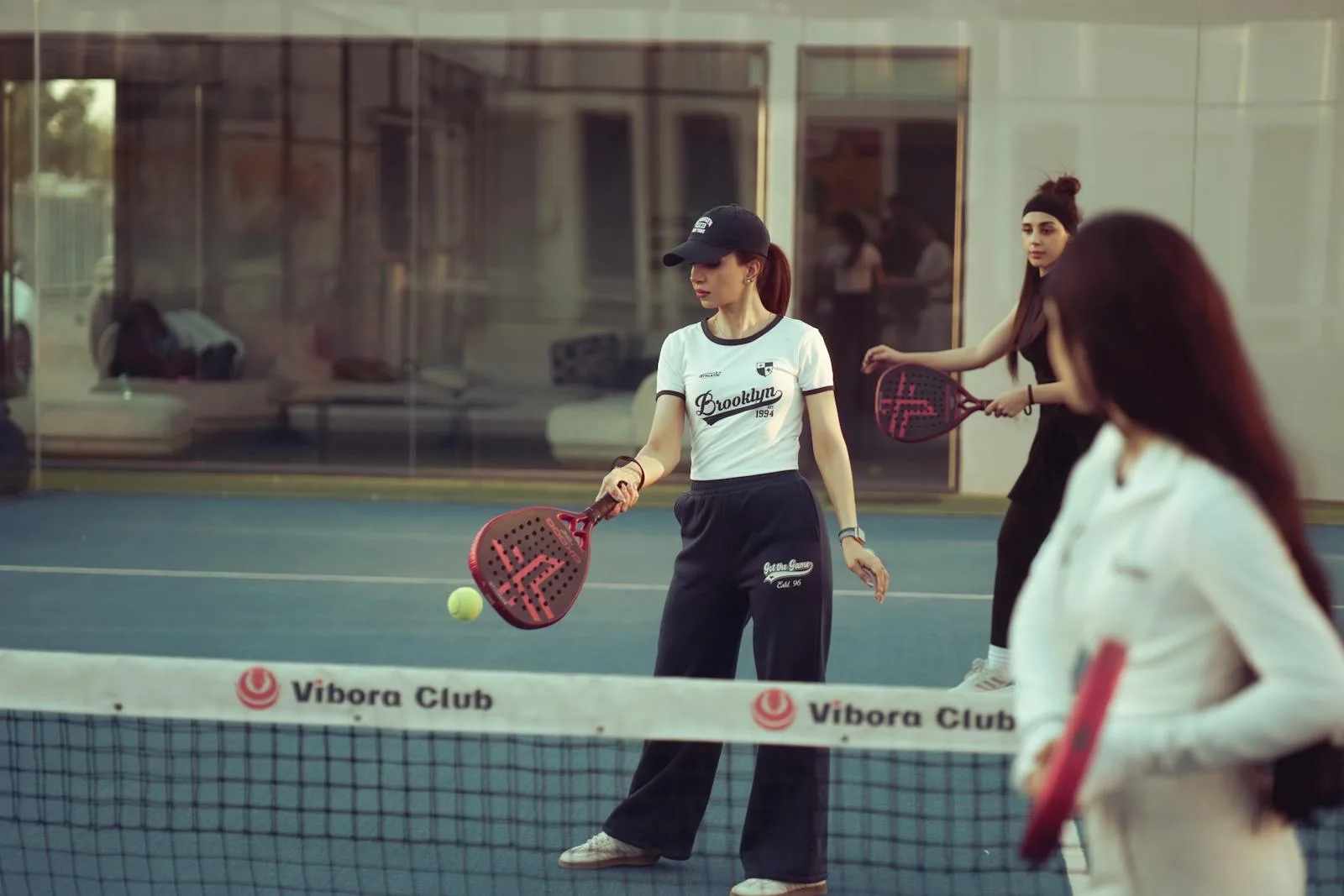
Indoor vs Outdoor Padel Courts in the UK
This is the biggest choice you’ll face when booking, and in the UK, it’s largely driven by one thing: rain. British weather being what it is, indoor courts give you year-round reliability. But outdoor courts have their own appeal, especially in summer.
Indoor Courts
Most premium padel venues in the UK — places like Game4Padel, We Are Padel, and the growing number of David Lloyd clubs with dedicated padel facilities — offer indoor courts. Here’s what you get:
- Consistent conditions — no wind, no rain, no sun glare. The ball behaves the same every session
- Better lighting — LED floodlights positioned to minimise shadows, which matters more than you’d think for reading the ball
- Temperature control — not always air-conditioned, but at least sheltered from January cold
- Higher court quality — indoor facilities tend to invest more in surface and wall quality
- Year-round availability — you’ll never have a session cancelled because of weather
The trade-off? Cost. Indoor courts typically run £30-50 per hour for four players, compared to £20-35 for outdoor. In London, expect to pay at the higher end. Venues like We Are Padel in places like Birmingham and Sheffield sit mid-range at around £32-40 per hour.
Outdoor Courts
Outdoor padel is where the sport started — Spain, Argentina, Mexico — these are warm-weather countries where playing outside is natural. In the UK, outdoor courts work brilliantly from April to October, and many venues have added canopy covers or retractable roofs to extend the season.
- Lower booking costs — typically £5-15 cheaper per hour than indoor
- Natural light — some players prefer it, especially for daytime sessions
- More atmospheric — there’s something about playing outdoors that feels more social
- Wind factor — this really changes the game. Lobs become risky, and ball flight is less predictable
If you’re booking outdoor courts in the UK, check whether the venue has any wind protection. Courts with solid back walls and partial covers handle British weather far better than fully exposed setups.
Covered Outdoor Courts
The hybrid option that’s becoming increasingly popular at UK venues. You get a roof overhead — keeping rain off — but open sides that maintain airflow and that outdoor feeling. Places like Padium in Manchester and several LTA-backed facilities offer this setup. It’s a good compromise if you want weather protection without the premium of a fully enclosed indoor centre.
Understanding Court Surfaces
The surface under your feet matters just as much as the walls around you. Most UK padel courts use artificial turf, but not all turf is created equal.
Artificial Grass with Sand Infill
This is what you’ll find on the majority of UK padel courts. The turf is a short-pile synthetic grass (usually 12-15mm high) with silica sand brushed into it. The sand provides grip, controls ball bounce, and helps the surface drain. For a related angle, see our Padel Grips Explained: Overgrip vs Replacement Grip guide.
- Ball bounce — consistent and medium-paced. Good for all levels
- Movement — allows controlled sliding, which becomes important as your game improves
- Maintenance — needs regular brushing to redistribute sand. Well-maintained courts feel completely different from neglected ones
- Durability — good quality turf lasts 5-8 years before needing replacement
The colour of the turf doesn’t affect play (blue, green, and grey are all common), but it does affect visibility. Blue courts with yellow balls tend to give the best contrast, which is one reason so many new UK venues choose blue.
Fibrillated vs Monofilament Turf
If you really want to know what you’re playing on, these are the two main turf types:
- Fibrillated — the fibres split into a web-like pattern. This creates a faster surface with less friction. The ball skids through lower. Experienced players often prefer this because it rewards aggressive, flat shots
- Monofilament — individual upright fibres that provide more cushioning and a slightly slower pace. Better for beginners because the ball sits up a bit more, giving you extra time to react
Most UK clubs don’t advertise which type they use, but you can tell by looking. Fibrillated turf looks slightly matted and webby. Monofilament looks more like individual blades of grass.
Concrete and Hard Court Surfaces
Less common in the UK but occasionally found at older installations or budget venues. Concrete courts play faster, offer no cushioning for joints, and give a more aggressive ball bounce. If you’re choosing the right padel racket, bear in mind that hard courts are tougher on equipment too — racket faces wear faster from ground contact.
Avoid concrete courts if you have any knee or ankle concerns. The impact difference compared to artificial turf is night and day.
Wall Types and How They Affect Play
Here’s where padel gets interesting. The walls aren’t just boundaries — they’re part of the game. And the type of wall material changes everything about how the ball comes back to you.
Tempered Glass
The standard for modern, professional-grade padel courts. Tempered glass panels (usually 10-12mm thick) line the back wall and parts of the side walls. The ball bounces off glass in a fast, predictable way — come off clean with good speed and a reliable angle.
- Best for — players who want consistent rebounds and enjoy playing off the back wall
- Found at — premium clubs, new-build venues, competition courts
- Downside — more expensive to install and repair. A cracked panel can put a court out of action for days
Metallic Mesh
The upper sections of the side walls (and sometimes parts of the back wall at older venues) use metallic mesh or wire fencing. The ball dies when it hits mesh — it absorbs the energy and drops, rather than bouncing back into play.
This is by design. The mesh sections create zones where different shots work. A ball that hits the glass comes back; a ball that hits the mesh doesn’t. Learning to use this difference is what separates intermediate players from beginners.
Mixed Wall Configurations
Every padel court combines both glass and mesh, but the ratio varies. The International Padel Federation (FIP) standard specifies:
- Back wall — 3 metres of glass at the bottom, mesh above
- Side walls — glass for the first 4 metres from the back, then mesh for the remaining section toward the net
- Total height — 3-4 metres depending on the section
Some UK venues, particularly older ones converted from tennis courts, don’t quite meet FIP standards. This isn’t necessarily a deal-breaker for social play, but if you’re training for competition, it’s worth checking.
Court Dimensions and Layout
A standard padel court is 20 metres long by 10 metres wide — roughly a third the size of a tennis court. The net sits at 88cm in the centre (slightly lower than tennis at 91.4cm), and the service boxes are marked out similarly to tennis but without tramlines, since padel is always played as doubles.
The smaller court size is deliberate. It keeps rallies going longer, reduces the fitness demands compared to tennis, and means the walls stay within reach for play. If you’ve been playing on a court that feels cramped or oversized, it’s probably not meeting the standard dimensions — which does happen at some improvised UK setups.
What to Look For When Booking a Court
Not all padel venues are equal, and a bit of homework before you book saves frustration. Here’s what to check:
Surface Condition
Ask when the surface was last maintained. Courts that haven’t been brushed recently have uneven sand distribution — you’ll notice bare patches where the turf is slippery and clumped areas where the ball bounces oddly. Top venues brush their courts weekly. Budget ones… less often.
Glass Quality
Scratched or fogged glass panels make it harder to see the ball, especially under artificial lighting. This is more of an issue at older indoor venues. If you’re playing at a new facility, you probably won’t notice — but at converted sports halls with original installations, it can be a problem.
Lighting
For evening sessions (which is most bookings in the UK, given work schedules), lighting quality matters. Look for venues with overhead LED floodlights rather than side-mounted options. Side lighting creates shadows on the court that make it harder to track the ball, particularly near the walls.
Booking Systems and Peak Times
Most UK padel venues use online booking through apps like Playtomic, Matchi, or their own systems. Peak times are typically weekday evenings (6-9pm) and weekend mornings (9am-12pm). Off-peak slots are often noticeably cheaper — sometimes half the peak price — and the courts tend to be in better condition because they’ve had fewer sessions that day.
Equipment Hire
If you’re still finding your feet, check whether the venue offers racket hire. Most do, at about £3-5 per session. But hire rackets are usually basic round-shaped models — fine for learning, but you’ll want your own once you’re playing regularly. Our guide to the best padel rackets for beginners covers what to look for when you’re ready to buy.
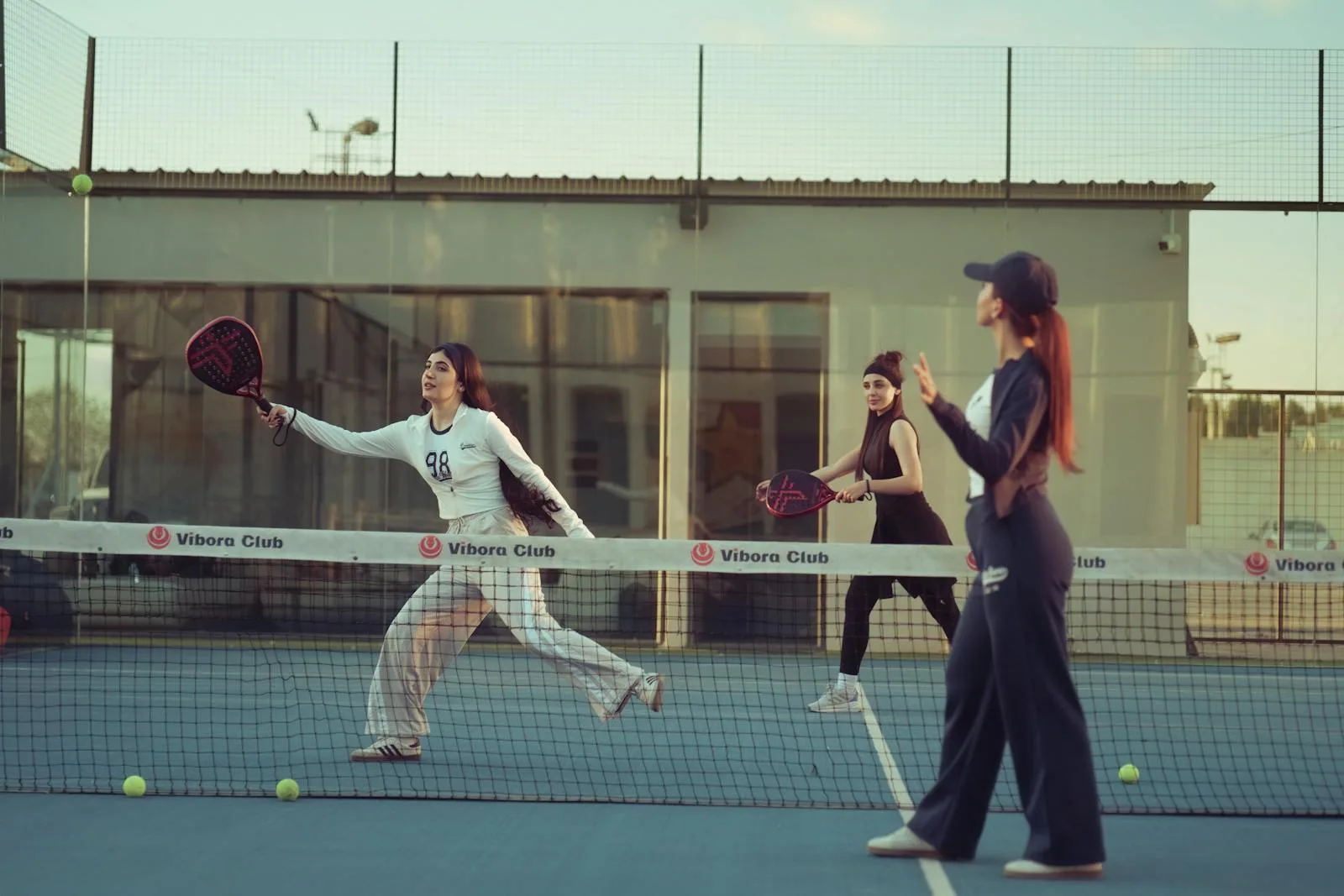
Finding Padel Courts Near You
The UK padel scene has exploded over the past three years. The Lawn Tennis Association (LTA) has invested heavily, and commercial operators like Game4Padel and We Are Padel have opened multi-court venues across the country. Here’s how to find courts:
- Playtomic app — the most thorough court finder for UK padel. Shows availability, pricing, and reviews
- LTA website — lists all registered padel venues including club and community courts
- Game4Padel and We Are Padel — check their websites for locations if you want a reliable, well-maintained experience
- Local leisure centres — many councils have added padel courts as part of sports facility upgrades. These tend to be the most affordable option at £15-25 per hour
London, Manchester, Birmingham, Leeds, and Edinburgh have the highest concentration of venues, but new courts are opening in smaller towns regularly. Even places like Henley, Reading, and Guildford now have dedicated padel facilities.
Beginner Tips for Your First Court Session
A few practical things that nobody tells you before your first game:
- Wear proper court shoes — not running shoes, not fashion trainers. You need lateral support for the side-to-side movement. Tennis shoes or dedicated padel shoes work best. And while you’re at it, choosing the right padel socks makes more difference than you’d expect
- Bring water — courts get warm, especially indoor ones. More than you’d think for a “small court” sport
- Arrive 10 minutes early — to check the court, warm up, and get used to how the ball bounces on that specific surface
- Don’t smash everything — padel rewards patience and placement over power. The walls are your friend, not your enemy. Use them
- Book with four players — padel is a doubles sport. Booking as a pair and hoping to find opponents is possible on some apps, but less reliable
The Bottom Line on Choosing a Court
For most UK players, the decision comes down to practical factors: what’s near you, what fits your budget, and whether you want the weather protection of an indoor court. If you’re just starting out, book an indoor court with artificial turf — it gives the most forgiving, consistent experience while you learn.
As your game develops, try different venues and surfaces. You’ll quickly notice which courts suit your style. Players who rely on power and flat shots tend to prefer faster fibrillated surfaces. Those who play a more tactical, wall-based game often enjoy the extra time that monofilament turf provides.
The UK padel infrastructure is improving rapidly. Courts that were patchy and improvised three years ago are being replaced by proper, FIP-standard facilities. Wherever you play, the sport is brilliantly fun — the court you choose just determines what flavour of fun you get.
Frequently Asked Questions
What is the quickest way to improve at padel? Play with consistent positioning, use the glass calmly and avoid forcing winners. Reliable lobs and volleys matter more than power early on.
Do padel beginners need coaching? A few lessons help a lot because padel movement, wall use and doubles positioning are not obvious if you come from tennis.
How is padel different from tennis? Padel is played on a smaller enclosed court, usually in doubles, with underarm serves and glass walls that keep points alive.
What should I check first with How to Choose the Right Court Guide? Start with the real use case, then check size, compatibility, running costs and maintenance. A product that looks good on paper can still be the wrong fit if it does not suit the room, routine or budget.
How do I avoid wasting money on How to Choose the Right Court Guide? Avoid buying on one headline feature alone. Compare the practical details, read the warranty or returns terms, and choose the option that solves your main problem rather than the one with the longest specification list.