The Babolat Premura 3 is the best padel shoe in this shortlist for players who want a responsive, padel-specific all-rounder. Bullpadel’s Ionic 25i is the value choice, Adidas Crazyquick Lightstrike prioritises lighter movement, Head Motion Pro 1.5 BOA adds precise adjustment and lateral structure, while the women’s Crazyquick Boost provides a women-specific option with Boost cushioning.
Quick answer: the best padel shoes
- Best overall: Babolat Premura 3.
- Best value: Bullpadel Ionic 25i.
- Best lightweight: Adidas Crazyquick Lightstrike.
- Best for stability: Head Motion Pro 1.5 BOA.
- Best women’s: Adidas Crazyquick Boost.
In This Guide
- How we chose
- Comparison at a glance
- Five padel shoes reviewed
- Which padel shoe should you buy?
- Soles and court surfaces
- Fit, sizing and replacement
- Frequently asked questions
How we chose
We compared exact UK variants using their stated outsole design, upper construction, cushioning, closure, fit category and intended use. Padel footwear has to accommodate repeated lateral changes of direction as well as short forward sprints, so we prioritised court-specific grip and side-to-side structure over running-shoe softness or fashion-led styling.
This is a specification-led guide, not a record of hands-on testing. Product pages often use broad performance language, so the recommendations below stay close to verifiable construction and intended use. Prices and size availability can change quickly; use the product page to check the colour and size currently offered before ordering.
No shoe can guarantee comfort or prevent an injury. Foot shape, previous injuries, court condition, sock choice and lacing all affect the result. The useful comparison is therefore about which design suits a particular priority—and what compromise comes with it.
Comparison at a glance
| Shoe | Best for | Listed variant | Key feature | Main compromise |
|---|---|---|---|---|
| Babolat Premura 3 | Best overall | Men’s 11.5 UK | Padel-specific Michelin outsole | Premium price and a performance-led fit |
| Bullpadel Ionic 25i | Best value | Men’s 9 UK | Dedicated padel shoe | Limited published technical detail |
| Adidas Crazyquick Lightstrike | Best lightweight | Men’s 10 UK | Lightstrike cushioning | Less structured than the stability pick |
| Head Motion Pro 1.5 BOA | Best for stability | Men’s 9.5 UK | BOA fit and padel outsole | Highest price in this shortlist |
| Adidas Crazyquick Boost | Best women’s | Women’s 5 UK | Boost midsole | Women’s size availability varies |
The table identifies the exact variants checked, but footwear ASINs may be tied to a particular size or colour. Confirm the selected size before payment. If you are between sizes or need a wide fit, prioritise a retailer with a clear returns policy rather than choosing solely by price.
The five best padel shoes
1. Babolat Premura 3: best overall

The Premura 3 earns the overall position because it is designed specifically around padel movement rather than adapted from a general trainer. Babolat states that its outsole was developed with Michelin, with flex grooves intended to support multi-directional movement. The Matryx Micro upper and lightweight tongue aim to keep the shoe breathable without removing the structure needed around the forefoot and heel.
That combination makes sense for regular players who want one pair to cover fast starts, defensive changes of direction and longer sessions. The Ortholite HybridPlus insole adds an everyday comfort feature, while the 3D heel design is intended to improve stability. Those specifications do not guarantee a perfect fit, and the performance-led shape may feel too close for players who need generous toe-box room.
- Buy it if: you want a premium, purpose-built all-round padel shoe.
- Skip it if: you need a clearly wide-fitting model or only play occasionally.
- Main compromise: the most rounded specification here comes at a premium price.
2. Bullpadel Ionic 25i: best value
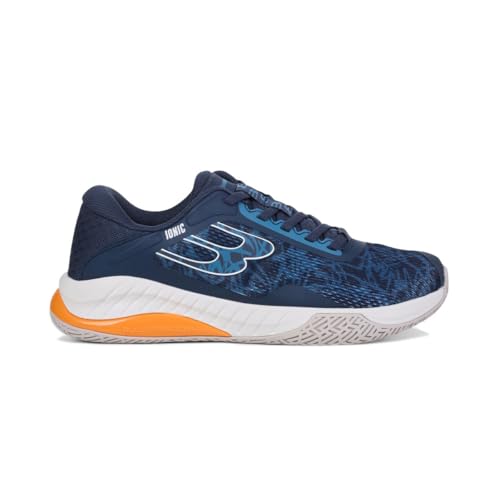
Bullpadel’s Ionic 25i is the lower-cost dedicated padel option in this group. That matters because a padel-specific sole and court-focused shape are more relevant than paying for a running brand or a heavily cushioned casual trainer. The blue men’s variant checked is a conventional lace-up design and keeps the buying decision relatively simple.
The product information provides less useful technical detail than the Babolat, Head and Adidas pages, so it would be wrong to make precise claims about cushioning compounds or outsole behaviour. Its strength is the balance of category fit and price: it gives newer or occasional players a recognised padel model without forcing them into the highest bracket. Check size availability carefully because shoe variants move in and out of stock independently.
- Buy it if: you want a proper padel shoe at the lowest price in this shortlist.
- Skip it if: you need detailed fit measurements or a specialist closure.
- Main compromise: good category value, but sparse product specifications.
3. Adidas Crazyquick Lightstrike: best lightweight option

The men’s Crazyquick Lightstrike uses a textile-and-synthetic upper with Adidas Lightstrike cushioning. Its design priority is lower-weight movement and a responsive feel rather than the more substantial lockdown offered by the Head BOA model. That suits quick players who dislike a bulky upper and want footwear that feels less restrictive during short accelerations.
Lightweight does not automatically mean more comfortable or more stable. Players with a history of ankle problems, a very wide forefoot or a preference for firm containment may be better served by a more structured design. The regular fit and lace closure are familiar, but fit still varies between feet and brands. Try the shoe indoors where the returns policy permits before committing it to court.
- Buy it if: low weight and quick-feeling movement are your priorities.
- Skip it if: you want the strongest lateral structure or a wider fit.
- Main compromise: a lighter construction can feel less reassuring than a stability-led shoe.
4. Head Motion Pro 1.5 BOA: best for stability

Head’s Motion Pro 1.5 BOA combines a dual-dial BOA fit system with a 3D TPU midfoot shank and the brand’s Lateral Control+ construction. The value of BOA is adjustment: the dials can tighten the upper in small increments without repeatedly retying laces. Head also specifies a padel outsole developed with court-surface company Mondo.
This is the clearest choice here for players who prioritise a held-in feel during side-to-side movement. Drift Defense adds material around the toe and medial side, while the Dynafoam midsole provides cushioning. The trade-off is cost and complexity. Some players prefer ordinary laces because they are familiar, easily replaced and allow different tension through separate eyelets.
- Buy it if: precise adjustment and lateral containment matter most.
- Skip it if: you prefer conventional laces or want a lighter, lower-cost shoe.
- Main compromise: the most technical fit system here also carries the highest price.
5. Adidas Crazyquick Boost: best women’s option

The women’s Crazyquick Boost provides a women-specific model rather than treating a smaller men’s shoe as the default. It uses a regular fit, lace closure, textile-and-synthetic upper and a Boost midsole. Boost is intended to provide responsive cushioning, making this the most obvious option in the shortlist for players who want a softer underfoot emphasis without moving to a running shoe.
Women’s labelling still does not guarantee that the shape will suit every woman. Heel width, arch position and forefoot volume vary by person, and the exact checked variant is UK size 5. Look for the same model in your required size or use the page’s size selector where available. Do not buy an unsuitable size merely to keep the same colour.
- Buy it if: you want a women-specific padel model with responsive cushioning.
- Skip it if: you need a wide fit or prefer a firmer, lower-profile platform.
- Main compromise: size and colour availability may be narrower than for men’s models.
Which padel shoe should you buy?
Choose the Babolat Premura 3 for the strongest all-round package. It combines a padel-specific outsole, flexible construction and performance-focused upper. The Bullpadel Ionic is the sensible starting point when value matters and you want to avoid using a general running trainer on court.
Choose the Adidas Crazyquick Lightstrike when a lighter feel is more important than maximum structure. Choose the Head Motion Pro BOA for fine closure adjustment and a supported midfoot. The women’s Crazyquick Boost is the clearest women-specific choice here, particularly if responsive cushioning appeals.
The biggest mistake is treating the category label as more important than fit. A technically advanced shoe that lifts at the heel or compresses the toes is the wrong shoe. Keep enough toe room for braking, make sure the midfoot does not slide during a lateral step, and compare both feet because they are rarely identical.
Soles, grip and court surfaces
Padel shoes versus tennis shoes
Padel and tennis shoes overlap, but the exact outsole and movement brief matter more than the name on the box. Padel involves frequent rotations and short lateral movements in a compact playing area. Some clay-court tennis shoes can work on sand-dressed artificial turf, yet not every all-court tennis outsole will release or grip in the same way. Our full padel shoes versus tennis shoes comparison explains where the categories overlap.
Running shoes are a poor default because they are built mainly for forward travel and often have a taller, softer platform. That does not mean a padel shoe prevents ankle sprains. It means a court shoe is designed for the movement and surface rather than for road mileage.
Understand outsole patterns
Herringbone patterns use repeated zigzags and are commonly associated with clay-style grip. Omni soles use smaller points or mixed patterns, while hybrid soles combine zones for grip and rotation. None is universally best because court carpet, sand quantity, moisture and maintenance affect traction. See our guide to herringbone, omni and mixed padel soles for a visual breakdown.
Indoor non-marking requirements can create a separate buying decision. Check club rules and read our indoor padel shoe guide when the court operator specifies non-marking rubber. Do not assume every outdoor padel shoe is accepted indoors.
Balance stability and cushioning
A lower, wider platform can feel planted during changes of direction, while a softer midsole can reduce the harsh feel of repeated impacts. Excessively soft cushioning may feel vague to players who want close court feedback. More structure can also feel warm or restrictive. The right balance depends on body mass, movement style, session length and personal preference rather than a fixed player level.
Shoes are only one part of sensible court preparation. Build intensity gradually, warm up and stop if pain changes your movement. The NHS guidance on sprains and strains explains what to do after a suspected sprain; footwear should never be presented as a substitute for medical advice or conditioning.
Fit, sizing and when to replace padel shoes
Getting the fit right
Try shoes later in the day when feet may be slightly larger, wearing the socks used for padel. The heel should remain secure during a controlled side step, the midfoot should feel held without numbness, and the toes need space when braking. Brand sizing is not perfectly transferable, so a familiar UK number is only a starting point.
If one foot is larger, fit that foot. Insoles can alter volume but cannot make a narrow toe box wide. Players who use orthotics should check that the original insole is removable and that the replacement does not raise the heel excessively. A returnable home try-on is more useful than guessing from generic claims that a model runs half a size small.
Replace by condition, not a calendar
There is no dependable rule that padel shoes last a fixed number of months. Frequency, body mass, movement, court roughness, gait and whether the shoes are worn away from court all affect wear. Inspect the outsole for smooth zones, uneven wear or loss of tread, and check whether the upper is separating or no longer holds the foot securely.
A compressed or tilted midsole, damaged closure, exposed internal material or recurring slipping are more useful warning signs than age alone. Alternating pairs may allow each to dry, but it does not create a guaranteed percentage increase in lifespan. Brush loose sand from the tread, air-dry shoes away from direct heat and follow the manufacturer’s cleaning advice.
What else beginners need
Shoes matter, but avoid turning the first purchase into a long accessories list. A suitable racket, balls, water and a way to carry them are enough to start. Our padel accessories checklist separates essentials from optional extras, while the padel bag guide helps when a racket compartment or shoe section becomes useful.
Frequently Asked Questions
What are the best padel shoes overall?
The Babolat Premura 3 is the best overall choice in this shortlist because it combines a purpose-built padel outsole, flexible construction and a performance-focused upper.
Can I use running shoes for padel?
Running shoes are not the best default because they are primarily designed for forward movement. A court-specific shoe usually offers a lower platform, lateral structure and an outsole intended for court surfaces.
Can tennis shoes be used for padel?
Some clay-court tennis shoes can suit sand-dressed padel courts, but outsole behaviour varies. Check the court surface and compare the exact sole rather than assuming every tennis shoe is interchangeable.
Which padel sole is best?
There is no universal winner. Herringbone, omni and hybrid patterns behave differently depending on carpet, sand, moisture and maintenance. Ask your club what works well on its courts.
How should padel shoes fit?
The heel should stay secure, the midfoot should not slide during lateral movement and the toes need room when braking. Fit the larger foot and use the socks you wear on court.
How long do padel shoes last?
There is no reliable fixed lifespan. Replace them when tread is worn smooth, the upper no longer holds the foot, the midsole is uneven or damaged, or traction has materially changed.
The bottom line
The Babolat Premura 3 is the best overall padel shoe in this comparison. Choose Bullpadel Ionic for value, Adidas Crazyquick Lightstrike for a lighter feel, Head Motion Pro BOA for adjustment and stability, or the women’s Crazyquick Boost for a women-specific cushioned option. Fit remains the final gate: the right model in the wrong size is still the wrong shoe.