The HEAD Evo Speed is the best beginner padel racket for most new players. It combines a soft fibreglass hitting surface with an easy-to-handle build and enough accessible power to remain useful as your technique improves. Choose the round Dunlop Megamax if budget and forgiveness come first, or the Wilson Optix V2 Lite if a lighter swing is your priority.
Quick answer: the best beginner padel rackets
- Best overall: HEAD Evo Speed — new players wanting easy power and comfort.
- Best budget: Dunlop Megamax Green — a forgiving first racket at the value end.
- Best lightweight: Wilson Optix V2 Lite — easy handling and reduced swing fatigue.
- Best for control: Bullpadel Indiga CTR 25 — learning placement and defensive shots.
- Best easy-handling alternative: Adidas Match Light 3.3 — casual players prioritising manoeuvrability.
- Best starter set: Wilson Optix two-player set — couples, families and new playing partners.
A first racket should help you make repeatable contact and control direction. Maximum smash power, carbon stiffness and professional-player endorsements are poor reasons to choose beginner equipment. If you already play regularly and want a longer-term performance option, see our intermediate padel racket guide.
In this guide
- How we chose
- Comparison at a glance
- The six best beginner rackets
- Head-to-head recommendation
- Choosing your first racket
- When to upgrade
- Frequently asked questions
How we chose
We assessed current rackets by shape, stated weight and balance, face and core materials, sweet-spot forgiveness, comfort, product clarity, UK availability and whether each model offers a distinct reason to buy. Manufacturer positioning and current product specifications carry more weight than vague marketplace claims.
This is a research-led buying guide rather than a claim that every racket has been court-tested. Racket feel is personal, and manufacturing tolerances mean the delivered weight can vary. We therefore focus on the features that matter most to a new player: manageable handling, a forgiving contact area, a comfortable response and enough stability to learn sound technique. Availability was checked immediately before preparing this guide, but prices and stock can move.
Comparison at a glance
| Racket | Beginner role | Design | Main compromise |
|---|---|---|---|
| HEAD Evo Speed | Best overall | Teardrop; soft fibreglass feel | Less control-led than a round racket |
| Dunlop Megamax Green | Best budget | Round; Pro EVA core | Less refined than the premium choices |
| Wilson Optix V2 Lite | Best lightweight | Round; lightweight design | Limited availability at the last check |
| Bullpadel Indiga CTR 25 | Best for control | Round; control-focused | Offers less free power |
| Adidas Match Light 3.3 | Best easy-handling alternative | Light, accessible design | Older model generation |
| Wilson Optix two-player set | Best starter set | Two round rackets plus three balls | Less choice over individual racket setup |
Do not compare a two-racket set directly with a single racket on headline price alone. Check exactly what is supplied and whether both players are comfortable with the same model.
The six best beginner padel rackets
1. HEAD Evo Speed: best overall
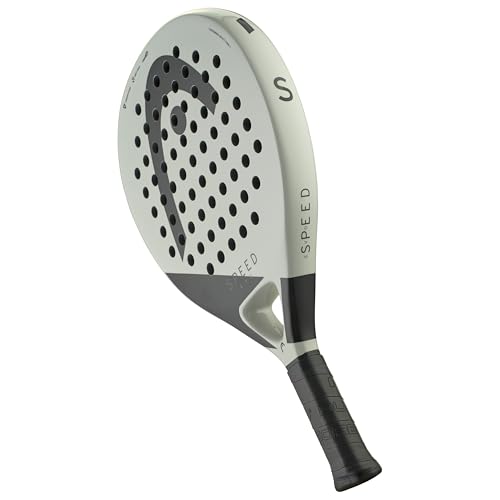
HEAD describes the Evo Speed as lighter, more comfortable and easier to play with for new players. Its fibreglass hitting surface gives a softer response than a stiff carbon face, while the teardrop shape provides more easy power than a purely control-led round racket. That blend makes it the most versatile first purchase here: accessible from the opening session but not immediately limiting as rallies become more confident.
- Buy it if: you want one dependable first racket with comfort, manoeuvrability and useful power.
- Skip it if: you specifically want the low-balance feel and maximum forgiveness of a round control racket.
- Main compromise: a teardrop format asks slightly more of your timing than the roundest options.
2. Dunlop Megamax Green: best budget

The Dunlop Megamax Green has the clearest budget-beginner brief in the shortlist. Its round head creates a broad central hitting area, while the graphite frame and Pro EVA core are intended to provide stability, comfort and predictable feedback. It suits a new player who wants to stop renting without paying for advanced materials they cannot yet exploit.
- Buy it if: price matters and you want a recognised brand with a genuinely beginner-oriented shape.
- Skip it if: you already play several times a week and expect to demand more refinement quickly.
- Main compromise: the construction is functional rather than premium.
3. Wilson Optix V2 Lite: best lightweight

The Optix V2 Lite is designed around easy manoeuvrability, a comfortable grip and a large sweet spot. That makes it useful when a normal adult racket feels cumbersome or the racket head arrives late at volleys. A lighter racket is not automatically more comfortable for everyone, but it can reduce the effort needed to prepare quickly at the net.
- Buy it if: easy handling and quick preparation matter more than maximum stability.
- Skip it if: you prefer a more substantial racket through defensive blocks and harder incoming balls.
- Main compromise: lighter rackets can feel less planted, and this model was scarce at our latest check.
4. Bullpadel Indiga CTR 25: best for control

The Bullpadel Indiga CTR 25 is the control-led option. Its round format is suited to players learning to direct the ball, defend from the back of the court and keep volleys compact. It is a better match for patient point construction than for someone choosing a racket mainly to hit harder overheads.
- Buy it if: consistency, placement and a round control shape are your priorities.
- Skip it if: you want the racket to provide more effortless depth and overhead pace.
- Main compromise: its controlled response supplies less free power.
5. Adidas Match Light 3.3: best easy-handling alternative

The Adidas Match Light 3.3 is another accessible option for casual players who value manoeuvrability. It gives the shortlist a recognised-brand alternative to the HEAD and Wilson without moving into Adidas’s stiffer, performance-led Metalbone range. This is important because a famous professional line is not necessarily the right starting point for learning clean contact.
- Buy it if: you want a light, manageable Adidas racket for social play and early coaching sessions.
- Skip it if: having the newest model generation or a clearly control-specific design matters.
- Main compromise: it is an older generation and its specification is less distinctive than the category leaders.
6. Wilson Optix two-player set: best starter set

The Wilson Optix set packages two round rackets with three balls. It makes sense for two people beginning together, a household building a shared kit bag or anyone who wants equipment ready for a first social game. Buying a set is about convenience rather than finding one perfectly tailored racket, so both players should still check grip comfort and handling.
- Buy it if: two new players need usable equipment together and value convenience.
- Skip it if: only one person needs a racket or the two players want different weights and handling.
- Main compromise: a shared set gives less individual choice than buying separately.
Head-to-head: which beginner racket should you buy?
Choose the HEAD Evo Speed if you want the best balance of comfort, accessible power and room to improve. It is the easiest single recommendation for an adult beginner who has not yet developed a strong preference.
Choose the Dunlop Megamax to minimise initial spend, the Bullpadel Indiga CTR for a round control-first design, or the Wilson Optix V2 Lite when manoeuvrability is the deciding factor. The Adidas is a sensible alternative for light recreational use. Buy the Wilson set only when its two-racket format is genuinely useful; it is not automatically better value for a solo player.
Choosing your first padel racket
Shape and sweet spot
Round rackets usually place the effective hitting area centrally and often carry a lower balance, making them easier to control on imperfect contact. Teardrop rackets blend control with more accessible power and can suit beginners who already have racket-sport timing. Diamond-shaped, head-heavy power rackets are usually a poor first purchase because their useful contact area sits higher and they demand earlier preparation.
Weight and balance
The number on the scale does not tell the whole story. A light but head-heavy racket can feel more demanding than a slightly heavier low-balance model. Most new adults should prioritise manageable swing weight and stable contact. If possible, hold the racket in ready position and rehearse compact volleys before buying. Stop if a racket causes discomfort rather than assuming your arm must adapt.
Face and core materials
Fibreglass faces and softer foams generally produce a more compliant response at modest swing speeds. Carbon constructions can feel firmer and more precise, but they are not automatically superior for a learner. The best material is the one that lets you contact the ball comfortably and repeat the same swing. Our guide to padel racket shape, weight and materials can help if the product descriptions become alphabet soup.
Budget and essential accessories
Spend enough to get a proper padel racket from a recognisable range, but do not pay for professional-level stiffness or adjustability before you know what you prefer. Add a few padel-specific balls, suitable court shoes and an overgrip if the handle feels too small or slippery. A racket protector can reduce cosmetic damage around the frame, but it does not compensate for poor technique or contact with the glass.
When should you upgrade?
Upgrade because your needs have changed, not because a calendar says you are no longer a beginner. A new racket becomes worthwhile when you can repeatedly find the sweet spot, understand whether you prefer defence or attack, and can explain what the current racket prevents you from doing. For many players that takes months; others can keep a forgiving first racket much longer.
- Keep it: contact is comfortable, control is improving and the frame is structurally sound.
- Consider changing: you consistently want a different balance, firmer response or more stability.
- Replace it: cracks, delamination or a loose structure affect safety or predictable play.
Technique normally produces a larger improvement than moving between similar rackets. Our guides to padel grips and common beginner mistakes are better next steps than chasing specifications after every difficult session.
Frequently asked questions
What shape is best for a beginner padel racket?
A round racket is the safest starting point because it usually offers a central sweet spot and control-friendly balance. A manageable teardrop can also suit beginners who want easier power.
How much should a beginner spend on a padel racket?
There is no universal minimum. Prioritise a genuine padel racket with a forgiving shape, comfortable response and clear specification; avoid paying extra solely for professional endorsements or advanced materials.
Is a lighter padel racket always better for beginners?
No. Lower weight can improve manoeuvrability, but balance and stability also matter. A light head-heavy racket may still feel demanding, while an extremely light model can move on harder contact.
Can a beginner use a carbon padel racket?
Yes, but carbon is not automatically an upgrade. A softer fibreglass face is often more comfortable at beginner swing speeds, while a stiff carbon face can feel less forgiving.
Should tennis players start with an advanced padel racket?
Usually not. Tennis experience helps with movement and timing, but padel uses different strokes, walls and compact volleys. A forgiving round or teardrop racket remains useful while those habits develop.
How long should a first padel racket last?
There is no fixed period. Keep using it while it is comfortable, structurally sound and supports your technique. Upgrade when you can identify a specific limitation rather than simply wanting a newer model.
The bottom line
The HEAD Evo Speed is the best beginner padel racket for most new players because it combines comfort, easy handling and accessible power. Choose the Dunlop Megamax for budget-friendly forgiveness, the Bullpadel Indiga CTR for control or the Wilson Optix V2 Lite for lower swing effort. Your first racket should make clean, repeatable contact easier—not imitate the equipment of an advanced attacking player.