The HEAD Evo Speed is the best padel racket under £100 for most UK players. Its forgiving teardrop shape, large sweet spot and manageable balance give beginners room to improve without locking an intermediate player into a purely defensive racket. Choose the Wilson Optix V1 for maximum forgiveness, or the Wilson Defy LS V1 only if you already want a more demanding power shape.
All six rackets were below the £100 ceiling when checked, but prices can move. The important decision is not which model has the longest feature list; it is whether the shape, weight and balance suit how you actually play.
In This Guide
- Our direct answer
- Rackets at a glance
- Six racket recommendations
- How to choose
- What you get for under £100
- The Bottom Line
- Frequently Asked Questions
Best Padel Racket Under £100: Our Direct Answer
Buy the HEAD Evo Speed if you want one clear answer. Its combination of a large hitting area, softer fibreglass face and teardrop versatility is better balanced than choosing an ultra-basic round racket you may quickly outgrow or a diamond racket that makes defensive contact harder.
The Wilson Optix V1 is the better first-day choice. It gives up some attacking intent for a round face and softer core that should make ordinary contact less punishing. If you have already developed reliable overhead technique, the Wilson Defy LS V1 is the only model here I would choose specifically for power.
Before buying, read our guides to choosing a padel racket and padel racket balance. They explain why two rackets with similar weights can feel completely different once you start reacting at the net.
Best Padel Rackets Under £100 at a Glance
Use this table to narrow the choice by playing need. It is deliberately free of buying buttons so you can compare the rackets before opening a retailer.
| Racket | Best for | Shape | Weight | Main characteristic |
|---|---|---|---|---|
| HEAD Evo Speed | Best overall | Teardrop | about 349g | Large sweet spot; easy power |
| Wilson Optix V1 | Best for beginners | Round | about 355g | Forgiving face; soft foam |
| Adidas Match Light 3.3 | Best lightweight option | All-round | about 360g | Manageable weight; accessible handling |
| Bullpadel Indiga CTR 25 | Best for control | Round | about 370g | Control-led shape; steady feel |
| Wilson Defy LS V1 | Best for power | Diamond | about 355g | Power-led shape; textured face |
| Dunlop Megamax | Best budget choice | Round | about 360g | Large sweet spot; graphite frame |
Our Six Under-£100 Racket Recommendations
1. HEAD Evo Speed — Best Overall
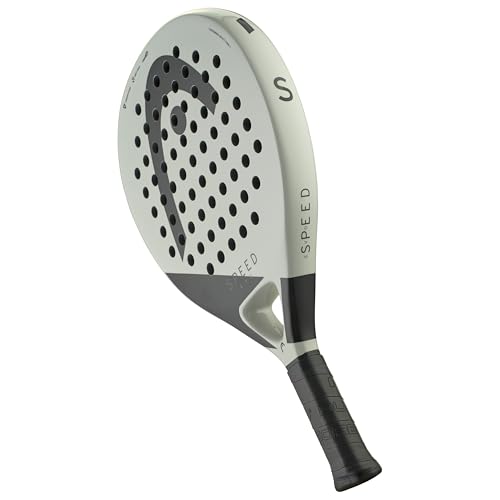
The HEAD Evo Speed is the easiest all-round recommendation in this group. Its oversized teardrop shape gives you more useful hitting area than a demanding compact racket, while the relatively low balance should feel quicker to position for volleys and defensive blocks.
HEAD specifies a fibreglass hitting surface, soft foam and Innegra reinforcement. That combination points towards comfort and accessible power rather than the crisp, rigid response of a premium carbon racket. It suits a newer player who wants one racket that will still make sense after the first few months.
- Buy it if: you want a forgiving racket that can handle defence, volleys and controlled overheads.
- Skip it if: you already strike cleanly and want a firm, precision-led carbon face.
- Main compromise: the soft response is friendly but less direct than a stiffer performance racket.
2. Wilson Optix V1 — Best for Beginners

The Wilson Optix V1 is the safest choice for a first racket. Its round shape and broad hitting surface prioritise contact and direction, which matters more to a beginner than squeezing out extra smash speed. Wilson pairs a fibreglass structure with low-density foam for a softer response.
That forgiving construction should help when contact lands away from the centre, but it is not designed for a player chasing maximum acceleration on overheads. Choose it for learning placement, defending calmly and keeping more balls in play.
- Buy it if: this is your first racket and consistency is the priority.
- Skip it if: you want a head-heavy shape for attacking play.
- Main compromise: easy control comes with modest top-end power.
3. Adidas Match Light 3.3 — Best Lightweight Option

The Adidas Match Light 3.3 is the sensible option when manoeuvrability matters more than a heavy, solid swing. Its stated weight is around 360g, putting it in an accessible range for quick reactions at the net and repeated defensive exchanges.
The available specification is less detailed than it is for the HEAD and Wilson models, so this is a choice to make for manageable handling and brand familiarity rather than a long list of claimed technologies. Check the delivered weight because production tolerances can make two rackets of the same model feel slightly different.
- Buy it if: you value quick preparation and do not want an obviously head-heavy racket.
- Skip it if: you need a clearly documented balance point or face construction before buying.
- Main compromise: sparse specifications make fine comparisons harder.
4. Bullpadel Indiga CTR 25 — Best for Control

The Bullpadel Indiga CTR 25 is the control-led alternative for players who prefer a steadier racket around 370g. The round format keeps the useful hitting area central, while the extra mass compared with the lightest choices can make blocks feel more settled when the racket is prepared on time.
Do not confuse control with effortless handling. A 370g racket can feel substantial over a long match, especially once an overgrip and protector are added. It makes more sense for an adult player comfortable with that weight than for someone choosing purely by brand.
- Buy it if: you want a round racket with a more planted feel.
- Skip it if: your main requirement is the lightest possible swing.
- Main compromise: greater stability can mean slower preparation.
5. Wilson Defy LS V1 — Best for Power

The Wilson Defy LS V1 is the most attack-minded racket here. Its diamond shape shifts the emphasis towards the upper part of the face, while Wilson describes a textured surface and power foam intended to support spin and acceleration. At roughly 355g, it avoids pairing that shape with excessive overall mass.
This is not the best starting point for most beginners. A diamond racket usually asks for cleaner timing and is less reassuring when defending low balls near the glass. It suits an improving player who already knows that overheads and aggressive volleys are central to their game.
- Buy it if: you make reliable contact and want the strongest power bias below the ceiling.
- Skip it if: you need a forgiving first racket or spend most points defending.
- Main compromise: the power-led shape reduces the margin for off-centre contact.
6. Dunlop Megamax — Best Budget Choice

The Dunlop Megamax covers the basics without pretending to be a tournament racket. Dunlop specifies a round head, graphite frame, Pro EVA core and a weight around 360g. Those are sensible ingredients for recreational play: a central sweet spot, manageable mass and enough frame stability for regular club sessions.
Its appeal is value and simplicity. The finish and response are unlikely to feel as refined as pricier carbon models, but a beginner gains more from predictable contact than from premium materials they cannot yet exploit.
- Buy it if: you want a low-cost round racket from an established racket brand.
- Skip it if: you already know you prefer a teardrop or diamond shape.
- Main compromise: practical construction rather than a performance-focused face.
How to Choose a Padel Racket Under £100
Choose Shape Before Material
Shape changes how forgiving and attack-minded a racket feels. Round rackets place the sweet spot centrally and are usually the lowest-risk choice for beginners. Teardrops balance a useful hitting area with more leverage, while diamond rackets reward clean overhead contact and punish late preparation.
Our full guide to round, teardrop and diamond racket shapes goes deeper. For this shortlist, the Wilson Optix and Dunlop Megamax are the easiest round choices, the HEAD Evo Speed is the flexible middle ground, and the Wilson Defy is the specialist attacking option.
Check Weight and Balance Together
Weight alone does not tell you how fast a racket will move. A lighter head-heavy racket may still feel slower to prepare than a slightly heavier head-light model. Remember that an overgrip and frame protector add mass, so leave a little margin if you are sensitive to swing weight.
If possible, follow the practical checks in our guide to testing a padel racket before buying. A few controlled volleys reveal handling problems faster than reading another page of specifications.
Match the Racket to Your Current Level
Buy for the player you are now, not the player you hope to become next year. A forgiving racket helps you learn spacing, preparation and placement. Our beginner padel racket guide is the better place to start if your priority is the largest possible margin for error.
Improving players can choose a more defined bias. The Bullpadel Indiga CTR keeps the focus on control, while the Defy LS makes sense only when a power-led shape serves your existing technique.
What You Get for Under £100
Sensible Materials, Not Premium Finishes
Below £100, fibreglass faces, soft foams and graphite or composite frames are common. That is not a flaw. Softer materials can be more approachable for recreational players because the ball leaves the face without demanding perfect timing. Premium carbon construction tends to provide a firmer, more precise response, but it does not automatically improve your game.
What you are less likely to get is a highly refined lay-up, tightly controlled weight distribution or the exact response used by advanced competitors. Our guide to carbon versus fibreglass rackets explains the trade-off without treating carbon as an automatic upgrade.
Budget for Protection and Grips
Leave room for overgrips, balls and a frame protector instead of spending the full budget on the racket. Padel rackets are vulnerable around the edge when they meet the glass, fence or court surface. Our guides to protecting your racket and fitting an overgrip cover the useful low-cost additions.
The LTA’s padel overview is also useful if you are new to the sport and want to find courts and understand the basic format before buying equipment.
The Bottom Line
The HEAD Evo Speed is the best all-round padel racket under £100 here. It gives newer players forgiveness without forcing them into a purely defensive round shape. Buy the Wilson Optix V1 if easy contact matters most, the Dunlop Megamax if you want to spend less, or the Wilson Defy LS V1 if you already have the timing to use a diamond racket.
The biggest mistake is choosing a racket for its most exciting feature rather than its everyday handling. A large sweet spot and manageable balance will improve more points than a power claim you cannot consistently access. If you are unsure how far to stretch the budget, see how much to spend on a padel racket.
Frequently Asked Questions
Can you get a good padel racket for under £100? Yes. Under £100 is enough for a forgiving fibreglass or mixed-material racket from an established brand. Prioritise shape, weight and balance over decorative technologies.
What racket shape is best for a beginner? A round racket is usually the easiest starting point because the useful hitting area is central and generous. A forgiving teardrop can also work if you want a little more attacking potential.
How heavy should a padel racket be? Many adult rackets sit around 350–375g before grips and protectors. Choose a weight you can prepare quickly for repeated volleys; the lightest racket is not automatically the most stable.
Is a carbon racket always better than fibreglass? No. Carbon can feel firmer and more direct, while fibreglass often feels softer and easier to use. The better material is the one that matches your level, comfort and preferred response.
Should I buy a diamond racket under £100? Only if you already make consistent contact and want a power bias. Beginners normally gain more from a round or forgiving teardrop racket.
Do padel rackets come with a cover? It varies by model and seller. Treat a cover as a separate detail to confirm before buying, and use a proper padel bag if you regularly carry shoes, balls and accessories.