The best padel racket for an intermediate player is one that suits the shots you are developing now. The Babolat Air Veron 2.6 is our best overall choice: its even-balance teardrop shape and mixed carbon/fibreglass face make a useful step towards quicker attacking play while keeping the racket manageable in defence. For a lighter, round-headed control option, start with the adidas Metalbone Team Light 3.4.
Choose the Bullpadel Ionic Light 25 if you like a versatile teardrop with a medium balance, or the Babolat Technical Veron 2.5 when your overhead timing already supports a head-heavy diamond. These are specific 2025 and 2026 models; compare each racket’s shape and weight with the one you use today. Our beginner-racket guide is a better starting point if you still want maximum forgiveness.
Our top 4 intermediate padel rackets

Babolat Air Veron 2.6, blue/black
Best overall for an improving all-round game
An even-balance teardrop with a 355 g stated weight and a carbon/fibreglass face.

adidas Metalbone Team Light 3.4, 2025
Best for lighter control
A round, even-balance racket with a 345–360 g stated range and a softer fibreglass face.

Bullpadel Ionic Light 25
Best for a versatile teardrop feel
A teardrop with medium balance, Glaphite face and MultiEVA core.
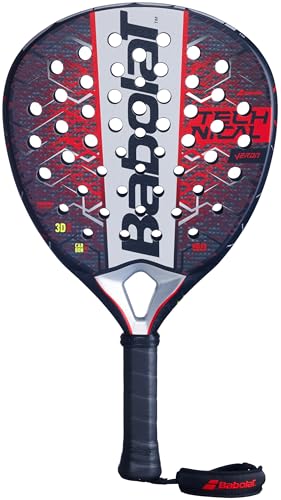
Babolat Technical Veron 2.5, black/red
Best for deliberate attacking play
A head-heavy diamond with a stated 365 g weight and a Carbon Flex face.
The rackets cover different preferences rather than a ranking by headline power. Before ordering, check the current seller, delivery location, return terms and the exact colour/model year on the purchase page; racket returns can be awkward once a grip or frame shows court wear.
In this guide
- Compare the four rackets
- Detailed intermediate-racket reviews
- Which racket fits your game?
- Shape, balance and face feel
- When to move beyond your first racket
- The bottom line
- Frequently asked questions
Compare the four rackets
| Racket | Best use | Shape and balance | Face and stated weight | Main compromise |
|---|---|---|---|---|
| Air Veron 2.6 | All-round progression and quick net play | Teardrop; even | Carbon Flex; 355 g ± 10 g | Less head-led force than a diamond |
| Metalbone Team Light 3.4 | Defence, control and easier handling | Round; even | Fibreglass; 345–360 g | Less natural overhead weight |
| Ionic Light 25 | Versatile teardrop play | Teardrop; medium | Glaphite; ask for actual weight | Weight figures differ between sources |
| Technical Veron 2.5 | Attack after consistent timing | Diamond; head-heavy | Carbon Flex; 365 g ± 10 g | More demanding on low defensive balls |
The quoted weights are manufacturer specifications or tolerances; an individual racket can vary. Grip size, added overgrips and balance change how the same number feels in your hand. The shape and balance distinctions are explained in our racket-shape guide and balance guide.
Detailed intermediate-racket reviews
1. Babolat Air Veron 2.6: best overall
The Air Veron 2.6 is the most rounded first upgrade in this group. Babolat specifies a teardrop head, even balance, 355 g ± 10 g stated weight and Carbon Flex surface, which mixes carbon and fibreglass. Those details point to easier repositioning for volleys and a more adaptable response than a heavy diamond. It suits a player building an attacking game without abandoning defensive lobs and blocks.
Its even balance favours quick repositioning at the net, while the Technical Veron’s head-heavy diamond suits a player with reliable overhead timing. Babolat lists the Air Veron 2.6 without a cover; check the seller’s bundle if a cover matters. The linked racket is blue/black.
- Best for: you split your game between defence and faster net exchanges.
- Main compromise: you want the softest round-headed feel or maximum head-heavy force.
2. adidas Metalbone Team Light 3.4: best lighter control
The 2025 Metalbone Team Light 3.4 gives a control-focused intermediate player a round head, even balance and a stated 345–360 g range. The adidas padel specification book lists a fibreglass face and Soft Performance EVA core. Its round shape puts the sweet spot nearer the centre, which is useful when your back-court contact is still becoming consistent.
This is the clearest choice here if a long session makes a head-heavy racket feel slow at the net. The extended Power Extra Grip handle adds leverage, but the fibreglass face and even balance make it a different proposition from the Technical Veron’s attacking diamond. Check the listed weight range and try a similar grip size before committing; even a few grams and an extra overgrip can change the handling you feel.
- Best for: defence, placement and easier handling matter most.
- Main compromise: you want the racket to contribute more weight to overheads.
3. Bullpadel Ionic Light 25: best versatile alternative
The Ionic Light 25 sits between the round adidas and the more attacking Babolat Technical Veron. Bullpadel’s 2025 catalogue describes a teardrop head, medium balance, Glaphite face combining glass and carbon fibres, MultiEVA core and textured 3D Grain surface. Those are useful ingredients for a player who changes often between lobs, volleys and controlled attacking shots.
Weight figures for the Ionic Light 25 differ between sources. If weight is a main reason for buying, ask the seller for the individual racket’s measured weight and compare it with your current one. Its teardrop and medium balance are clearer reasons to choose it here. The textured surface can help grip the ball; technique and contact remain central to producing spin.
- Best for: you want a middle-ground teardrop with a medium balance.
- Main compromise: you need a confirmed narrow weight range before buying.
4. Babolat Technical Veron 2.5: best for power progression
The Technical Veron 2.5 is the deliberate attacking option. Babolat lists a diamond head, 365 g ± 10 g stated weight, 270 mm balance point and Carbon Flex face. The head-heavy layout puts more mass behind an overhead when contact is clean. Compared with a stiff carbon-only power racket, its carbon/fibreglass surface provides some flex while keeping the shape and balance of an attack-oriented model.
That extra head weight asks for earlier preparation when you defend low balls or react to a fast volley. Choose this diamond when your timing and preferred court position already support an attacking shape. Check the seller’s bundle if a cover matters to you.
- Best for: you finish points with well-timed overheads and want a diamond shape.
- Main compromise: you are still late on defensive blocks or prioritise easy manoeuvrability.
Which racket fits your game?
For most intermediate players buying one upgrade, choose the Air Veron 2.6. It gives you room to develop both net and back-court play without committing to a head-heavy racket. The Metalbone Team Light 3.4 suits a player whose first priority is a controlled, quick swing. Choose the Ionic Light 25 for a medium-balance teardrop, especially if you can confirm its individual weight. The Technical Veron 2.5 is a purposeful choice for an established attacking style.
The common upgrade mistake is choosing by the professional printed on the packaging. Watch where your own rallies break down: late volley preparation points towards easy handling; weak overheads with reliable timing may justify more head weight; frequent off-centre contact favours a larger, more central sweet spot. Our racket trial checklist helps make that comparison on court.
Shape, balance and face feel
Round, teardrop or diamond?
The round adidas keeps its central hitting area easiest to find when you are defending. The Air Veron and Ionic Light teardrops move the feel towards a mix of control and attacking reach. The Technical Veron’s diamond puts more emphasis on high contact and deliberate overheads. Shape alone never guarantees a bigger sweet spot or an easier smash; the balance, core and your swing matter too. Our shape, weight and material guide goes deeper.
Balance can matter more than the number on the scale
A 355 g racket can feel more tiring than a heavier one if its mass sits farther towards the head. Compare the balance point and how quickly you can reset after a volley, then check the actual unit’s weight within its tolerance. The Technical Veron is head-heavy; the Air Veron and adidas are even-balanced. The Ionic Light’s catalogue describes medium balance, while its published gram figures conflict, so confirm the weight if you are buying specifically to reduce load.
Choose face feel for your usual contact
Fibreglass generally gives a more flexible surface; carbon can feel firmer, but weave, resin and core change the result. The adidas uses a fibreglass face, the Babolat Veron models use Carbon Flex, and the Ionic Light uses Bullpadel’s mixed-fibre Glaphite. None promises injury prevention. If your elbow is sore or your grip needs adjustment, address technique and fit before assuming a new material will solve it; see our padel injury guide.
When to move beyond your first racket
Upgrade when you can describe a repeatable limit in your current racket: perhaps late preparation at the net, difficulty controlling a firm face on slower balls, or too little stability on well-struck volleys. An expensive replacement cannot correct spacing or contact point on its own. Keep your current racket for a short side-by-side trial if possible; use the same balls, court and grip thickness to make the comparison fair.
Before choosing a new model, check whether your current grip is worn or too thick, and whether a fresh overgrip changes the feel. A damaged frame or softened core is a separate reason to replace a racket; our replacement guide covers those signs. Finally, check the seller’s returns and whether the exact order includes a cover. Marketplace terms can differ from brand-direct offers.
The bottom line
The Babolat Air Veron 2.6 is the best overall intermediate padel racket in this shortlist for an improving all-round game. The adidas Metalbone Team Light 3.4 offers easier round-headed control; the Bullpadel Ionic Light 25 is a medium-balance teardrop alternative; and the Babolat Technical Veron 2.5 suits a player who already attacks with reliable timing. Decide by the shot you need to improve, then confirm the exact model year and individual weight before ordering.
Frequently asked questions
Which padel racket is the best overall upgrade for an intermediate player?
The Babolat Air Veron 2.6 is our best overall choice in this shortlist. Its even-balance teardrop and Carbon Flex face suit an improving player who alternates between defence and quick net play.
Should an intermediate player choose a round or teardrop racket?
Choose round if central contact, defence and easy handling are your priorities. Choose a teardrop when you want a versatile balance of defensive control and attacking play. The adidas Metalbone Team Light is the round option here; the Air Veron and Ionic Light are teardrops.
When does a diamond racket make sense?
A diamond suits a player with consistent overhead timing who deliberately wants more head-led force. The Technical Veron 2.5 is head-heavy and asks for quicker preparation on low defensive balls.
How much does racket weight matter?
Compare both the stated weight range and balance. An even-balance racket can move more easily than a similarly weighted head-heavy one. Ask for the individual racket weight if a narrow range matters, especially for the Ionic Light 25 because published figures conflict.
Will a carbon face automatically give me more power?
Face feel depends on the fibre mix, core, balance and your swing. The Babolat Veron models blend carbon and fibreglass; the adidas has a fibreglass face. Try to compare similar shots with the same balls before deciding.
What should I check before ordering online?
Confirm the exact model year and colour, the seller, return conditions, supplied cover and any stated weight tolerance. A short on-court trial with your usual grip thickness is valuable for a racket that is costly or difficult to return once used.