The Raquex Clear Protector is the best padel racket protector for most players. It is a smooth, transparent 400mm-by-32mm TPU strip supplied as a pair, and the manufacturer lists it at 5g. That combination makes it a sensible default when you want useful edge coverage without a bulky textured ridge. Choose a rough protector only if you accept more surface texture in exchange for a thicker-feeling sacrificial layer.
A protector reduces cosmetic wear and takes some scraping from the glass, mesh or floor; it cannot make a racket impact-proof or repair structural damage. The important buying checks are width, finish, adhesive, weight and compatibility with the exact frame—not the most dramatic protection claim on the packet.
Guide Sections
- Comparison table
- Six protector reviews
- How to choose
- How to apply one
- When to replace it
- Balance and wall play
- Final verdict
- Frequently asked questions
Best Padel Racket Protectors at a Glance
The listed weights are manufacturer or listing claims for the protector itself. Adhesive overlap, trimming and production tolerances can change the installed result, so players sensitive to head weight should weigh the racket before and after fitting.
| Protector | Best for | Finish | Pack | Weight / fit |
|---|---|---|---|---|
| Raquex Clear Protector | Best overall | Smooth clear TPU | 2 | 5g claimed |
| Palbea Transparent Protector | Best lightweight textured option | Textured clear tape | 2 | 7g claimed |
| RYZE Smooth Protector | Best smooth value pack | Smooth clear tape | 2 | 7g claimed |
| RYZE Rough Protector | Best rough value pack | Textured clear tape | 2 | 7g claimed |
| HEAD Antishock Skin | Best minimalist branded option | Clear branded skin | 1 | 6g claimed |
| adidas Antishock Tape | Best adidas option | Black/white polyurethane | 1 | Check racket compatibility |
The Six Best Padel Racket Protectors
1. Raquex Clear Protector — Best Overall

Raquex earns the overall recommendation because its specifications address the main trade-offs directly: a smooth clear TPU surface, 400mm length, 32mm width, two strips and a claimed 5g weight. The smooth finish is intended to slide rather than catch when the frame brushes glass, while the clear construction leaves the racket design visible.
It suits most club players and newer rackets where discreet protection matters. Compared with the 7g RYZE Smooth, it claims less added weight; compared with rough options, it presents less texture at the contact edge.
Main compromise: a slim protector cannot absorb every heavy collision. Buying check: confirm that 400mm by 32mm covers the vulnerable top arc of your racket and that the existing frame is clean and undamaged before application.
2. Palbea Transparent Protector — Best Lightweight Textured Option
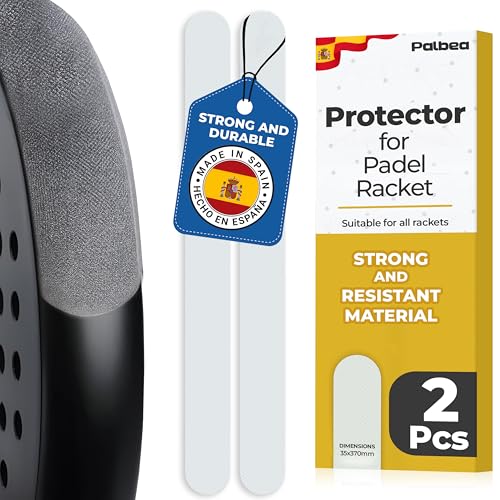
Palbea earns this category by combining a micro-textured clear surface with a claimed 7g weight and two protectors. It gives buyers a rougher sacrificial surface without hiding the frame graphics, and the listing states that its flexible adhesive is intended for smooth-headed padel rackets.
It suits frequent wall players who prefer a textured layer but do not want a black or branded strip. Raquex is the better default for the lightest, smoothest installation; RYZE Rough is the nearest alternative when the buyer prefers that brand or application format.
Main compromise: texture can create more drag than a smooth film during glancing wall contact. Buying check: use it only on a clean, smooth frame and avoid assuming “transparent” means invisible—the micro-grid and edges will still be noticeable.
3. RYZE Smooth Protector — Best Smooth Value Pack

RYZE Smooth earns its place as an accessible two-pack with a transparent finish and a claimed 7g installed weight. Its appeal is repeatability: use one now and keep the second as the direct replacement, rather than switching material or thickness when the first strip becomes worn.
It suits recreational players who want a smooth transparent protector and a spare in the bag. Raquex is preferable when its slimmer 5g specification and 32mm width are attractive; RYZE Rough is the same basic choice for players who deliberately want texture.
Main compromise: it adds slightly more claimed head weight than Raquex and offers no model-specific moulding. Buying check: centre the strip before pressing the adhesive down, because repeated lifting during fitting can weaken adhesion and trap dust.
4. RYZE Rough Protector — Best Rough Value Pack

RYZE Rough is the clear choice within the RYZE pair for players who want a textured outer surface. It retains the transparent two-pack format and the same claimed 7g weight as the smooth version, which makes the decision about finish rather than price tier or branding.
It suits rackets that already feel stable at the head and players who prioritise a more substantial sacrificial surface. Choose RYZE Smooth for less drag and a cleaner edge; choose Palbea when a different micro-grid construction is preferred.
Main compromise: the rough surface is more visible and may catch more during a scrape along glass. Buying check: do not stack it over an old protector; remove the worn strip, clear adhesive residue safely and start with a dry surface.
5. HEAD Antishock Skin — Best Minimalist Branded Option

HEAD Antishock Skin earns the minimalist branded category with a manufacturer-listed weight of 6g and a simple purpose: protecting the frame from shocks and scratches. It is a single, low-profile accessory from a major racket brand rather than a multipack built around replacement value.
It suits HEAD owners and players who prefer a familiar branded product with a stated weight. Raquex provides two strips and a lower claimed weight; HEAD makes more sense when brand confidence and a single installation matter more than pack value. The official HEAD specification confirms the 6g figure.
Main compromise: one strip gives no ready spare, and brand matching does not guarantee perfect fit on every racket shape. Buying check: compare the protector’s width and curve with the racket crown before removing the backing.
6. adidas Antishock Tape — Best adidas Option

The adidas Antishock Tape earns a specialist place because its official specification is unusually clear: polyurethane construction, 37cm by 3.6cm by 0.5mm, with a black-and-white transparent design. It suits buyers who want a visibly branded strip rather than an almost invisible film.
It is most relevant to compatible adidas rackets. The smooth clear options are more universal and discreet, while adidas gives a defined branded look and known dimensions. Crucially, the official product page says it is not compatible with the Metalbone range or the Adipower Multiweight model.
Main compromise: this is the least universal recommendation here. Buying check: verify the exact racket model against the official adidas compatibility warning before ordering.
How to Choose a Padel Racket Protector
Smooth vs Textured
Smooth film is the safer all-round choice because it keeps the outside edge relatively clean and is less likely to drag during a glancing wall scrape. Textured protectors create a more pronounced sacrificial surface, but that texture is visible and can change how the crown feels against glass. Neither finish makes direct impacts safe.
Weight and Balance
Five to seven grams sounds minor, but it sits at the top of the racket, where it can make the head feel slightly heavier. The effect is more noticeable on a light or already head-heavy racket. If balance matters, weigh the racket before installation and treat manufacturer weights as approximate rather than laboratory measurements.
Coverage and Compatibility
Protect the upper arc and shoulders that are most likely to meet the wall or floor without covering holes, loose trim or manufacturer features. Universal tape still needs enough flexibility for the racket profile. Model exclusions override a generic “one size” claim—adidas is the clearest example in this shortlist.
If the racket itself is still undecided, start with our guide to padel racket shape, weight and material or the beginner racket shortlist. A protector cannot correct a frame that is already too heavy or unsuitable.
How to Apply a Padel Racket Protector
- Remove the old protector: peel slowly and follow the racket manufacturer’s advice for any residue; do not use aggressive solvent on painted or composite surfaces.
- Clean and dry the crown: remove dust, grease and moisture so the adhesive meets the frame rather than dirt.
- Find the centre: align the middle of the strip with the top centre of the racket before exposing all the backing.
- Work outwards: press a short section at a time towards each shoulder, following the curve without stretching the tape excessively.
- Press the edges: smooth bubbles and check that no edge lifts into a hole or trim line.
- Leave it to bond: follow the product instructions before playing or exposing the racket to heat and moisture.
Do not use a heat gun to force a protector around the frame. Excess heat can affect paint, adhesive and composite materials. If the strip will not conform without creasing or tension, choose a narrower or more flexible protector.
When to Replace a Racket Protector
Replace the protector according to its condition. A protector has finished its job when it splits, peels at the edges, shifts, traps grit underneath or exposes the frame at the main contact points. Frequent defensive wall play will wear one faster than occasional social matches.
- Peeling edge: replace before it catches further or collects debris.
- Deep cut or missing section: the sacrificial layer no longer covers that part of the frame.
- Movement or trapped grit: remove it so contamination does not rub against the paint.
- New crack beneath the tape: stop using the racket and inspect the frame; another protector is not a repair.
Carry the spare from a two-pack, but fit it at home rather than rushing beside the court. Replacement is also a good time to inspect the crown and check the grip setup and overgrip condition.
Do Protectors Affect Racket Balance and Wall Play?
Any protector adds some mass at the head. For most recreational players the difference from a 5–7g strip will be modest, but players who tune racket weight or use a head-heavy diamond shape may notice it. Do not stack layers: extra tape increases mass, creates raised edges and can conceal damage.
A smooth protector should slide more cleanly during accidental glass contact than a coarse surface, but wall contact is never a technique to encourage. Court position and preparation matter more than protector choice. Our padel court guide explains the glass and enclosure, while the International Padel Federation documents provide the official rules and court framework.
Most importantly, a protector is not structural reinforcement. A crack, soft spot, loose edge or change in sound after a collision needs inspection. Covering it with fresh tape can hide a problem rather than solve it.
Final Verdict
Choose the Raquex Clear Protector for the best all-round balance of low claimed weight, smooth wall contact, discreet appearance and two-pack value. Palbea is the alternative for a lightweight textured surface, while the RYZE pair makes the smooth-versus-rough choice especially clear.
HEAD is the tidy branded single-strip option. Choose adidas only after checking the racket model because the official exclusions make it a specialist recommendation. Whichever protector you fit, treat it as a replaceable wear layer—not permission to collide with the court.
Frequently Asked Questions
Does a padel racket need a protector?
It is optional, but a protector can reduce cosmetic scraping and wear around the vulnerable upper frame. It cannot prevent every chip, crack or structural impact.
Is a smooth or rough protector better?
Smooth protectors are the better general choice for less drag during glancing wall contact. Rough protectors provide a more textured sacrificial surface but are more noticeable.
Will a protector change racket balance?
It adds weight at the head, typically around the 5–7g claimed by several products here. Sensitive players and head-heavy rackets may notice the change.
Can I put a new protector over an old one?
No. Remove the worn protector, inspect and clean the frame, then apply one new layer. Stacking adds weight and can hide damage.
How often should a padel protector be replaced?
Replace it when it peels, splits, shifts, traps grit or exposes the frame. Usage and wall contact matter more than a fixed number of weeks.
Can protector tape repair a cracked racket?
No. Tape is a wear layer, not a structural repair. Stop using a racket with a suspected crack or soft spot until it has been assessed.